
Tip: Activate javascript to be able to use all functions of our website
Tip: Activate javascript to be able to use all functions of our website
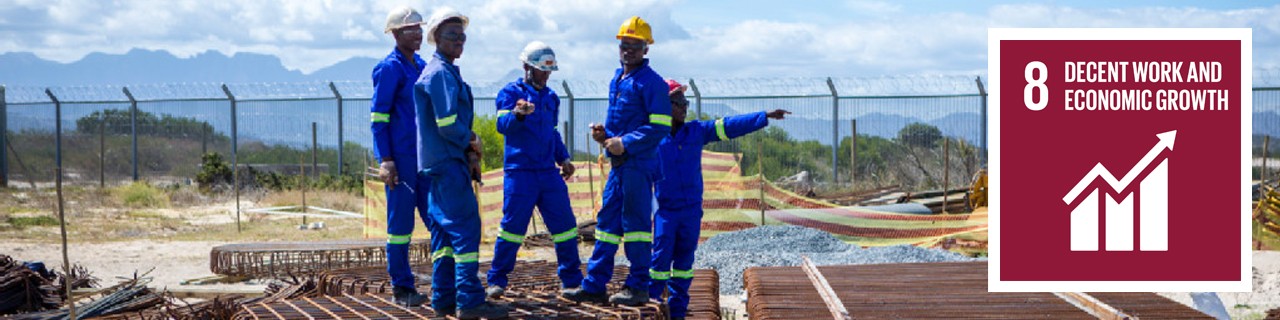
The good news is that many jobs have been created worldwide in recent years. The latest figures show that global unemployment rate stood at 4.9 percent, "a historically low level", according to the International Labour Organization (ILO). This is due to development and growth momentum in almost all regions of the world. In Africa, too, the African Development Bank (AfDB) recorded growth of more than 4 percent for the continent as a whole. In fact, the continent is now the fastest-growing economy after Asia, with 12 out of 20 growth champions located there. These include Ethiopia and Rwanda, as well as Senegal, Uganda and Benin. As a result, the high level of unemployment, which remained a major challenge just ten years ago, has now been put into perspective; the COVID-19 crisis has now been overcome in many countries of the Global South as well.
However, the good figures mask the fact that many people are still in precarious employment or work in the informal sector. According to the ILO, the reality is different “beneath the surface”. Progress on the decent work agenda has stalled and inequalities remain. This applies in particular to young people and women. The latter account for only around two fifths of employment worldwide. Young people are hit even harder, with an unemployment rate of 12.4 percent. Globally, 260 million young people are not in employment, education or training. Both groups still face significant obstacles to entering the labour market and then finding employment with decent working conditions and decent remuneration. It is now clear that work – if available, fairly paid and backed by social security – is one of the best ways to escape poverty.
That is why it is important to strive for qualitative growth. In the past, growth was mostly measured quantitatively. However, unrestricted economic growth can jeopardise development rather than promote it. For example, when it damages the environment or comes at the cost of people’s well-being. Therefore a new way of thinking has established itself. Economic output and prosperity for all must converge and be decoupled from the consumption of resources. KfW is also committed to the goal of sustainable, high-quality growth based on a circular economy that promotes all three dimensions of development – economic, environmental and social.
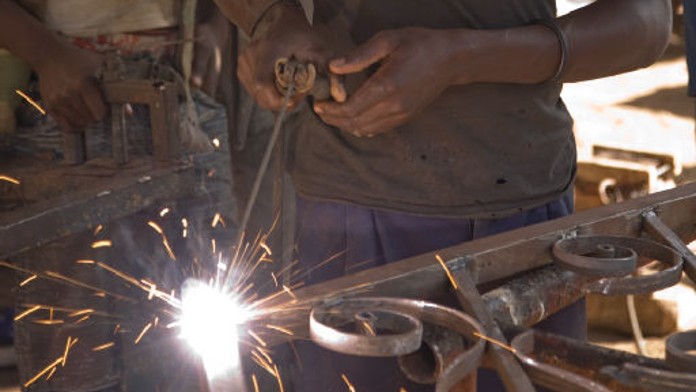
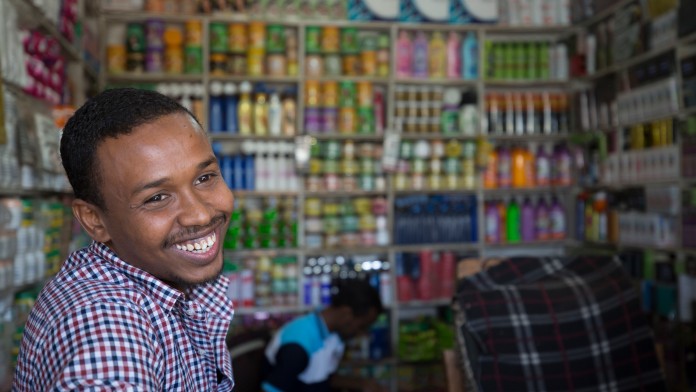
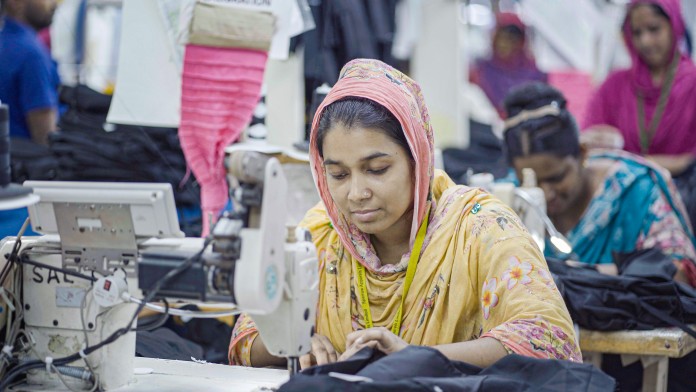
This requires investment and capital. In countries in the Global South, the majority of companies only consist of one to three people. From sewing shops to kiosks and carpenters, these small and microenterprises typically generate up to 80 percent of national economic output. However, their opportunities to grow and create new jobs could improve considerably if they had a favourable environment, above all access to financial services.
Another challenge is the still low investment rates in many poor countries. For example, Africa only receives between 4 and 6 percent of the world’s direct foreign investments. This is more than in the past, but the majority still flows to other parts of the world. Such investments are important for driving development and creating jobs.
Against this background, KfW promotes decent work and qualitative growth in partner countries through its projects. At the same time, it is working to create a supportive environment for economic activity – from stable financial markets and quality education and training to well-maintained infrastructure. Not only does this help companies and local people, it also creates the basis for investments from abroad, including Germany. German companies can therefore also benefit from KfW’s involvement. KfW lays the foundation for their economic activities in the Global South and provides access to markets that, in some cases, are still considered a challenging prospect.
In its partner countries, KfW Development Bank promotes employment and qualitative economic growth that equally bears economic, social and ecological aspects in mind. In 2025, it provided new financing totalling over EUR 1.4 billion, which is expected to contribute to the achievement of SDG 8.
Financing agreements signed in 2025 are expected to create or secure more than 994,000 jobs in the coming years; close to 2,400 companies are expected to participate in vocational training with more than 132,000 people expected to complete vocational training courses. More than 100,000 people are also expected to have better access to financial services and more than 69,000 companies are expected to be supported in improving their competitiveness.
One Pager: Effectively shaping gender equality the financial sector
One Pager: Harnessing the potential of an integrated approach to employment promotion
Impact Investments – development policy impact with returns
More about Africa's potential on our “Focus on Africa” page
SDG 8 on the Federal Ministry for Economic Cooperation and Development (BMZ) website (German only)


Share page
To share the current page content with your network, click the button below and then select the desired option in the dialog box.
Note on data protection: By clicking the button, your browser's sharing function is used. If you select an external provider when sharing, personal data may be processed by the provider. Please read our data protection principles for more information.
Your browser does not support sharing with external services.
Alternatively, you can also copy the short link: https://www.kfw-entwicklungsbank.de/s/enzBXxta
Copy link Link copied