
Tip: Activate javascript to be able to use all functions of our website
Tip: Activate javascript to be able to use all functions of our website

As of: 03/2026
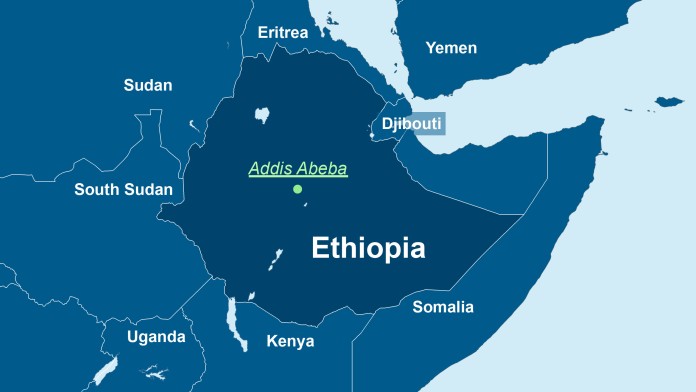
Due to its geographical and climatic exposure, Ethiopia is disproportionately affected by the consequences of climate change. Extreme weather events occur with corresponding frequency, particularly droughts and floods, some of which result in significant crop failures and losses in agriculture and livestock farming and repeatedly lead to poverty and food insecurity in rural areas that threaten livelihoods. Against this backdrop, Germany, together with other international partners, including the World Bank, supports the Rural Productive Safety Net Programme (PSNP).
Despite strong economic growth of 7.3% p.a. recently, Ethiopia faces a variety of challenges: The poverty rate (the proportion of the population living on less than USD 3 per day) has risen again for the first time in several decades due to numerous armed conflicts and a severe economic crisis.
The UNHCR estimates the number of internally displaced persons at around 2.0 million (as of 25 October). In addition, there are currently an estimated 1.1 million refugees in the country, mainly from South Sudan, Sudan and Somalia.
Extreme weather events lead to prolonged periods of drought alternating with heavy rainfall, resulting in severe flooding and landslides. Around 50% of agricultural land is affected by degradation, leading to massive losses of fertile soil every year. This destroys crops and jeopardises the livelihoods of many farmers; water and fodder shortages threaten the camel, cow and sheep herds that are essential for feeding the population.
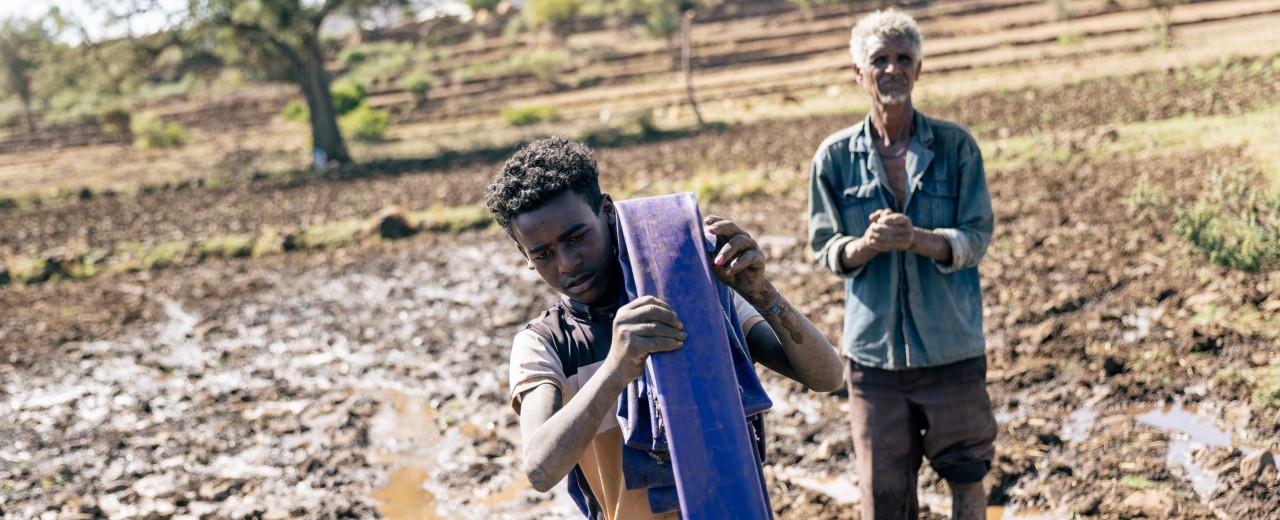
The Programme for Social Protection and Rural Development (PSNP), which has been in existence since 2005 and is the largest of its kind in sub-Saharan Africa, secures the livelihoods of around 8 million poor and food-insecure people through social transfers granted in return for community service. The community service performed by the beneficiaries involves projects for rural and agricultural development and for environmental and resource protection, such as the maintenance and expansion of collectively used agricultural irrigation systems and large-scale projects for erosion control, retention, groundwater aquifer regeneration and reforestation.
In addition, a large proportion of the beneficiaries receive support (advice, training, start-up capital) to set up micro-enterprises, thereby creating long-term income prospects for poor households and enabling them to escape their dependence on social transfers.
One of the many PSNP projects started around seven years ago in Tigray: in a 68-hectare water catchment area, terraces, walls and ditches were and are being built on steep slopes to collect water during the rainy season and use it to feed groundwater and irrigate newly planted crops.
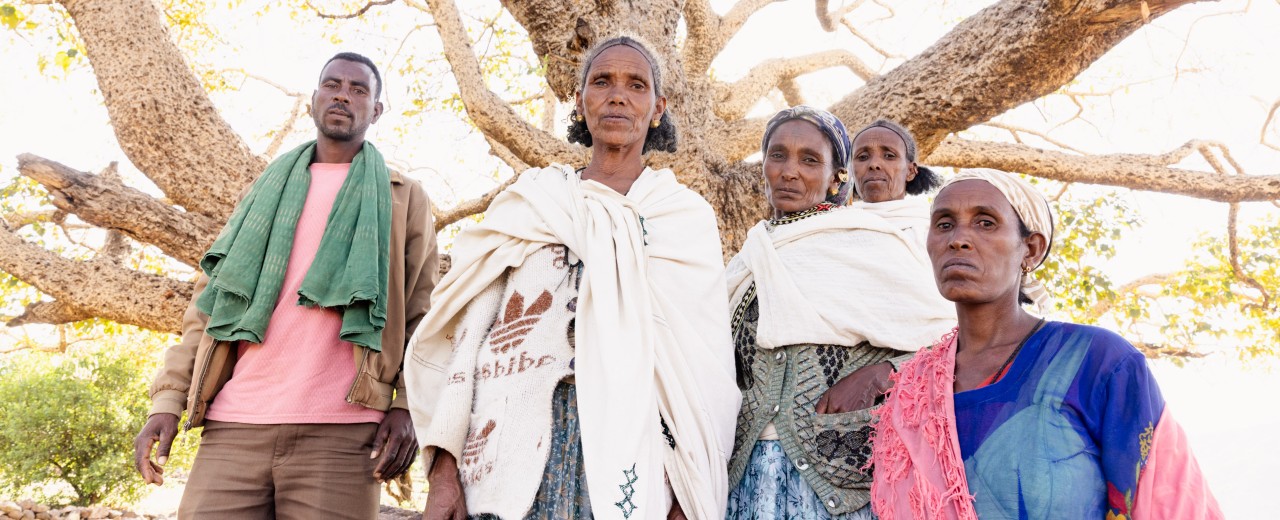
The project contributes to the achievement of the following United Nations Sustainable Development Goals:
/SDG-2_EN_Responsive_1080x608.png)
KfW Group
KfW Development Bank
Governance, Stabilisation and Water East Africa and African Union

/SDG-1_EN_Responsive_1080x608.png)


Share page
To share the content of this page with your network, click on one of the icons below.
Note on data protection: When you share content, your personal data is transferred to the selected network.
Data protection
Alternatively, you can also copy the short link: https://www.kfw-entwicklungsbank.de/s/enzB-sI4
Copy link Link copied