
Tip: Activate javascript to be able to use all functions of our website
Tip: Activate javascript to be able to use all functions of our website

On behalf of the German Federal Government, KfW Development Bank works closely with the EU Commission, other EU institutions and EU member states to further increase the effectiveness of European development cooperation (DC). In a multipolar world with increasing geostrategic challenges, we are joining forces to utilise synergies for transformation projects worldwide, thereby strengthening our own resilience and supporting Europe's role in foreign and security policy.
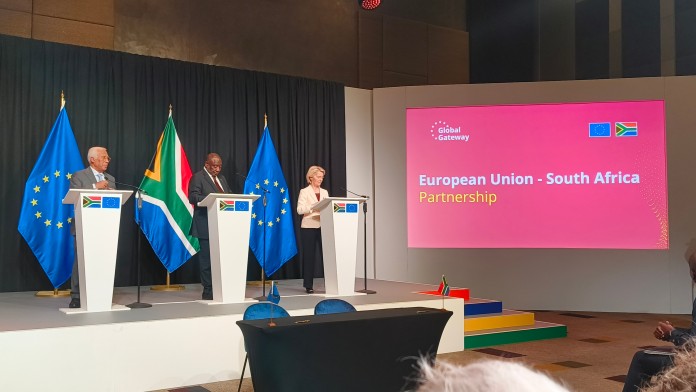
At the centre of this commitment is Global Gateway, the EU's infrastructure financing offer to partner countries. As a connectivity strategy, it is also intended to contribute to better integration within and between the partner countries, as well as their connection with the EU. The aim of Global Gateway is to mobilise up to EUR 300 billion for infrastructure projects in partner countries between 2021 and 2027. The total sum is to be raised from funds provided by the EU Commission, the EU member states, all European implementing organisations and the private sector. Global Gateway is thus seen as a European response to the international commitment of other major donors around the world and complements corresponding offers from other G7 countries in the joint Partnership for Infrastructure Investments (PGII). They are intended to provide impetus for important changes in the partner countries and, in the case of Global Gateway, also open doors for the European economy. Global Gateway thus combines international responsibility with Europe's strategic interests and is intended to benefit all parties involved.
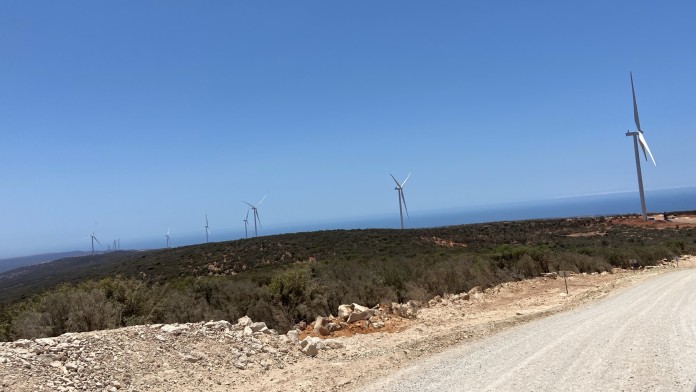
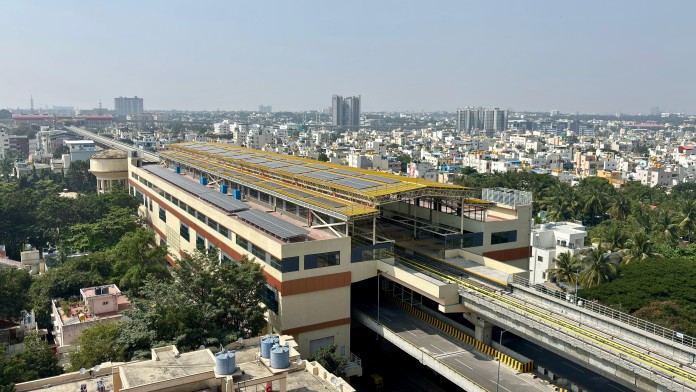
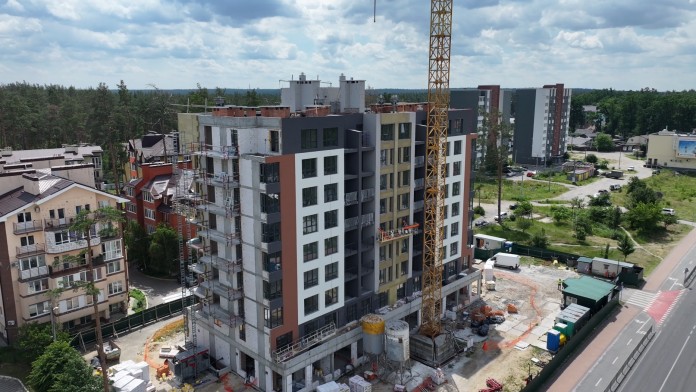
It finances infrastructure projects in the areas of digitalisation, climate and energy, transport, health, education and research, as well as support to enabling sectors. The aim is to promote growth, employment, innovation and better living conditions in the partner countries, but also to strengthen Europe as a business location by securing the supply of energy and raw materials, employment and global value chains.
worldwide by region and sector in EUR
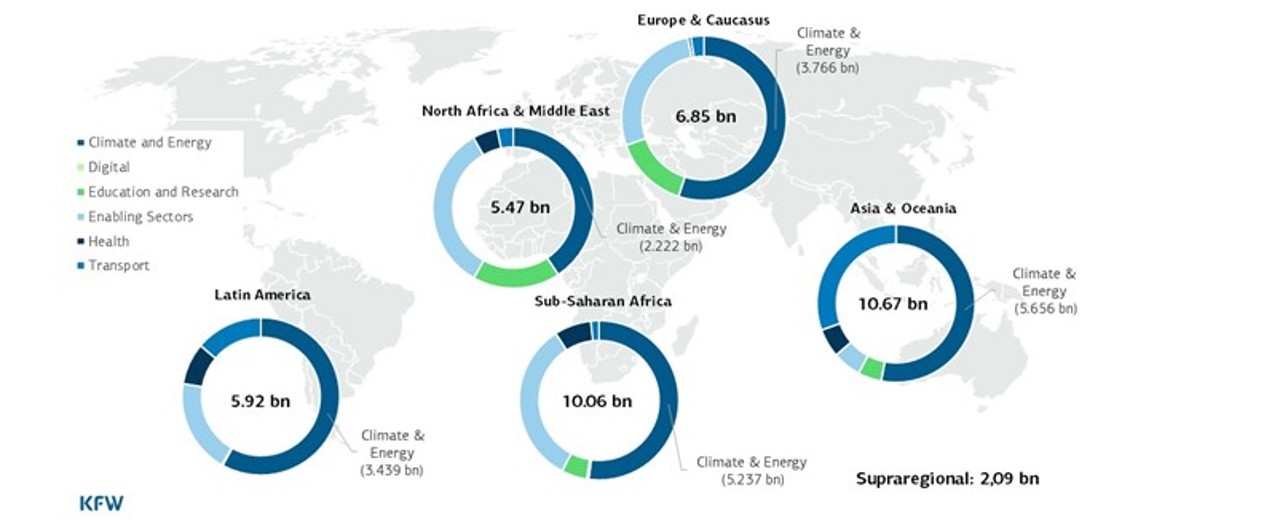
In the period 2021 to 2025 alone, KfW Development Bank provided a total amount of EUR 42.57 billion for this purpose – which is almost 15 per cent of the total volume targeted by Global Gateway. 1584 projects in 79 countries benefited from this. At EUR 10.67 billion (25%), the highest volume was allocated to the Asia/Oceania region. The Indian subcontinent was once again a key focus, with projects totalling EUR 5.61 billion supported. One in three projects is located in sub-Saharan Africa, where the highest number of individual projects was recorded.
Half of the funds (50.74%) were allocated to climate and energy projects, followed by measures to strengthen enabling sectors at just under 25%, transport (11.28%) and education and research (7.19%).
To support the EU even better in its development cooperation, KfW works together with its partner institutions AECID (Spain), AFD (France), BGK (Poland) and CDP (Italy) within the framework of JEFIC - Joint European Financiers for International Cooperation. As a network of European development banks and financial institutions, JEFIC co-operates primarily with public sector partners in developing countries and emerging economies. JEFIC also plays an important role in involving the private sector and improving the local regulatory framework. A core objective of JEFIC is to mobilise capital from public and private sources for investment in European development cooperation. This enables the EU's public funds to be utilised more efficiently in strategic priority areas such as Global Gateway.

Share page
To share the current page content with your network, click the button below and then select the desired option in the dialog box.
Note on data protection: By clicking the button, your browser's sharing function is used. If you select an external provider when sharing, personal data may be processed by the provider. Please read our data protection principles for more information.
Your browser does not support sharing with external services.
Alternatively, you can also copy the short link: https://www.kfw-entwicklungsbank.de/s/enzBYiOj
Copy link Link copied