
Tip: Activate javascript to be able to use all functions of our website
Tip: Activate javascript to be able to use all functions of our website
As of: 10/2025
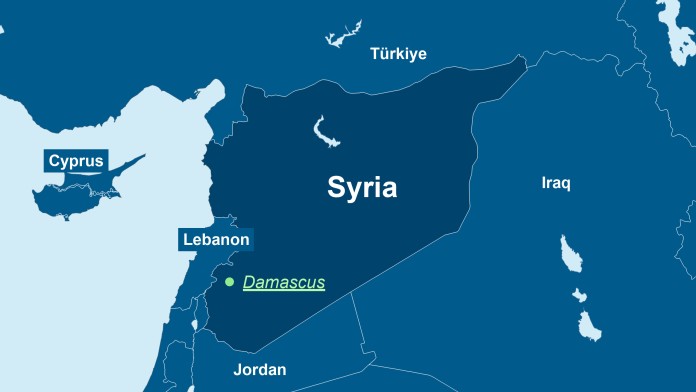
One year after the fall of Bashar al-Assad, according to UN figures, 1.2 million people from neighbouring countries have returned to Syria, and 1.9 million internally displaced persons have returned to their home regions (as of December 2025). The returnees are confronted with destroyed houses, damaged infrastructure, too few jobs, inadequate medical care and an unstable security situation.
German development cooperation was also active in Syria during the almost 14 years of conflict – without cooperating with the Assad regime. Development cooperation can now support a peaceful transition through existing channels. Nationwide, KfW cooperates with UN organisations and selected non-governmental organisations. Among others: on behalf of the Federal Ministry for Economic Cooperation and Development (BMZ), projects are being implemented with UNICEF, UNDP, UNRWA and UN-Habitat – contributing to improving living conditions and social cohesion.
Millions of people are dependent on humanitarian aid, many of whom are internally displaced persons or refugees. Access to basic services such as healthcare, water and education is limited in many regions.
Around 70% of people in Syria have no access to a safe water supply. Destroyed or damaged water and sanitation infrastructure promotes the spread of diseases such as acute diarrhea and respiratory infections.
Children and young people are at risk due to a lack of education and training opportunities and suitable psychological support and can become caught in a vicious circle of violence, displacement and hopelessness.
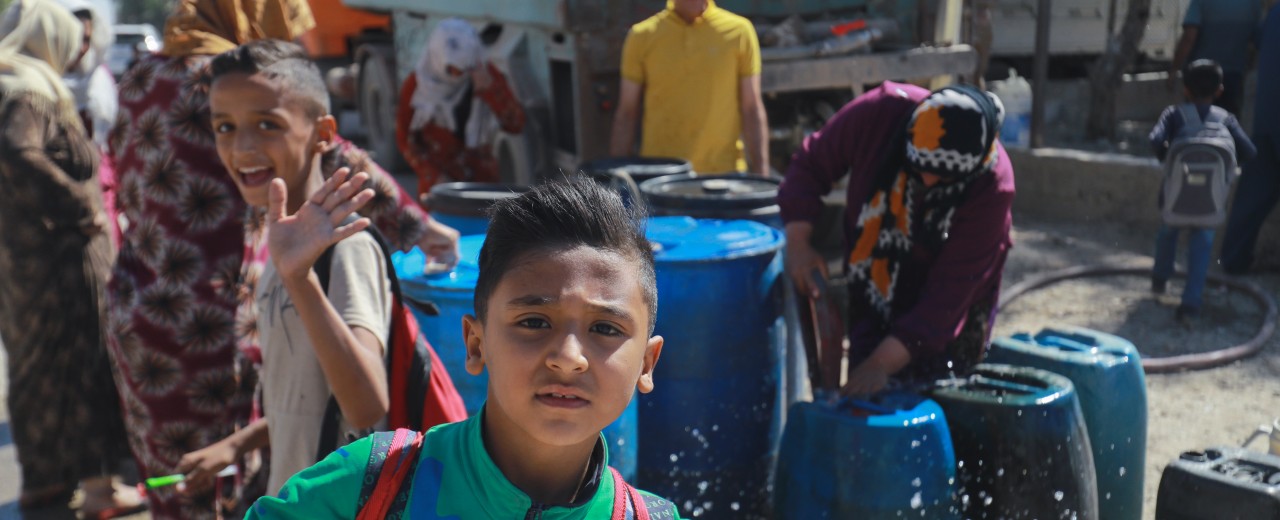
UNICEF's commitment is to children and young people. They have suffered and continue to suffer particularly from the war – their resilience has been and continues to be strengthened through improved school infrastructure, psychosocial care and educational opportunities for adolescents. UNICEF Wash projects rehabilitate public water and sanitation infrastructure, including water distribution networks, storage facilities, wells, pumping stations, sewage networks and treatment plants. This benefits both the local population and internally displaced persons and returning refugees. To ensure greater operational sustainability, equipment, spare parts and accessories for the maintenance and operation of the rehabilitated infrastructure are also provided.
UN-Habitat supports local communities in rehabilitating public infrastructure. In planning workshops with local communities, internally displaced persons and representatives of the administrations, priorities are set, and the implementation of measures is initiated. Representatives of different age groups, men and women, refugees and locals take part in these workshops.
UNDP pursues a multisectoral approach with the central concern of promoting employment, including for returnees from neighbouring countries. In recent years, short-term jobs have been created primarily through cash-for-work measures, small-scale rehabilitation work on social infrastructure (schools, hospitals), the installation of solar panels, and the removal of rubble and waste disposal. In addition, training, counselling and job placement services have been organised, as well as subsidies for production equipment, machinery and start-ups. Women and people with disabilities are to receive special support.
Legal advice and support for agricultural businesses in communities with high numbers of refugees from Lebanon complement the measures. Farmers receive training and are provided with fertiliser and seeds.
From 2026 onwards, selected hospitals will be rehabilitated and connected to the supply infrastructure (water, sewage, electricity and waste disposal), and will also be equipped with urgently needed medical equipment.
UNRWA is involved in the ‘Digital Transformation and Basic Services’ project through targeted investments in digital infrastructure (including hardware/IT equipment and improved internet connections) and innovative technologies (software) to improve access to, and the quality and efficiency of, UNRWA's basic services in the areas of education, health and data governance for Palestinian refugees. Specifically, UNRWA is modernising teaching in the education sector through hybrid, interactive learning methods. In the health sector, the financing of a new health management information system with user-oriented functions (including a queue management system and a knowledge-sharing platform) is helping to improve the quality and efficiency of medical care.

The projects implemented in Syria are designed to address the needs of vulnerable populations quickly and in the short term through measures such as cash-for-work, while also achieving a long-term positive impact on the living conditions of local people through structural reconstruction, particularly of local economic and social infrastructure.
The project contributes to the achievement of the following United Nations Sustainable Development Goals:
/SDG-6_EN_Responsive_1080x608.png)
/SDG-7_EN_Responsive_1080x608.png)
/SDG-9_EN_Responsive_1080x608.png)

/SDG-3_EN_Responsive_1080x608.png)


Share page
To share the content of this page with your network, click on one of the icons below.
Note on data protection: When you share content, your personal data is transferred to the selected network.
Data protection
Alternatively, you can also copy the short link: https://www.kfw-entwicklungsbank.de/s/enzB9Ujw
Copy link Link copied