
Tip: Activate javascript to be able to use all functions of our website
Tip: Activate javascript to be able to use all functions of our website

As of: 07/2026
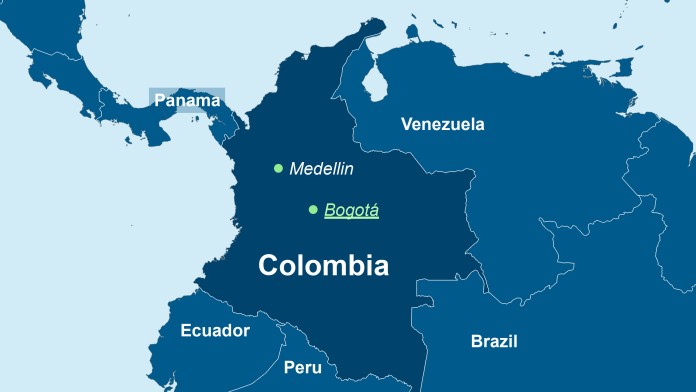
Colombia’s economic growth has to date been largely driven by the intensive use of natural resources. In the long term, this is not sustainable from an environmental, climate, social or economic perspective. At the same time, the country is already clearly experiencing the impacts of climate change. In recent years, the Colombian government has created an important policy framework: climate legislation and strategies, its voluntary climate targets (nationally determined contributions, NDCs), as well as sector-specific requirements in areas such as energy, transport and water for the implementation of the NDCs and the United Nations Sustainable Development Goals (SDGs).
The programme “Climate-friendly Economic and Urban Development” builds on this framework. On behalf of the German Federal Government, KfW supports Colombia in making investments in cities and economic sectors more climate-friendly and in promoting the transition to a resource-efficient and climate-resilient development pathway.
Colombia’s economic model has so far been strongly shaped by the use of natural resources. Commodities such as oil, coal and other primary products contribute significantly to growth, but are associated with high resource consumption and negative impacts on the environment and the climate. In the long term, this path is neither ecologically nor socially and economically sustainable. The need for action is particularly high in the urban sectors: around 80% of the population already live in cities, the transport sector accounts for about 12.5% of national greenhouse gas emissions, around 78% of which are attributable to road transport, and many transport systems are overloaded. At the same time, the energy sector is a key factor in achieving climate targets: although around 80% of the power mix comes from hydropower, the mining and energy sector is responsible for around 10% of emissions, and increasing periods of drought make the use of hydropower more difficult. The share of non-conventional renewable energies such as solar and wind power therefore needs to increase significantly. There are also considerable investment and implementation needs in the water sector, for example regarding access to clean drinking water, sanitation, wastewater treatment and the protection of urban areas from climate impacts.
Against this backdrop, the Colombian government is attaching growing importance to climate change mitigation and adaptation. With Climate Change Act 1931 of 2018, further strategies for the energy transition and the updating of the national climate targets (NDCs) to a reduction of greenhouse gas emissions by up to 51% by 2030, key framework conditions have been established. Energy, transport and water are key sectors for implementing the NDCs and at the same time contribute to several goals of the 2030 Agenda.
In this context, there is a strong need to translate these political objectives into concrete investments and operational measures and to provide suitable financing structures, particularly in the areas of sustainable urban development, energy transition and water infrastructure. This is precisely where the project “Climate-friendly economic and urban development” comes in.
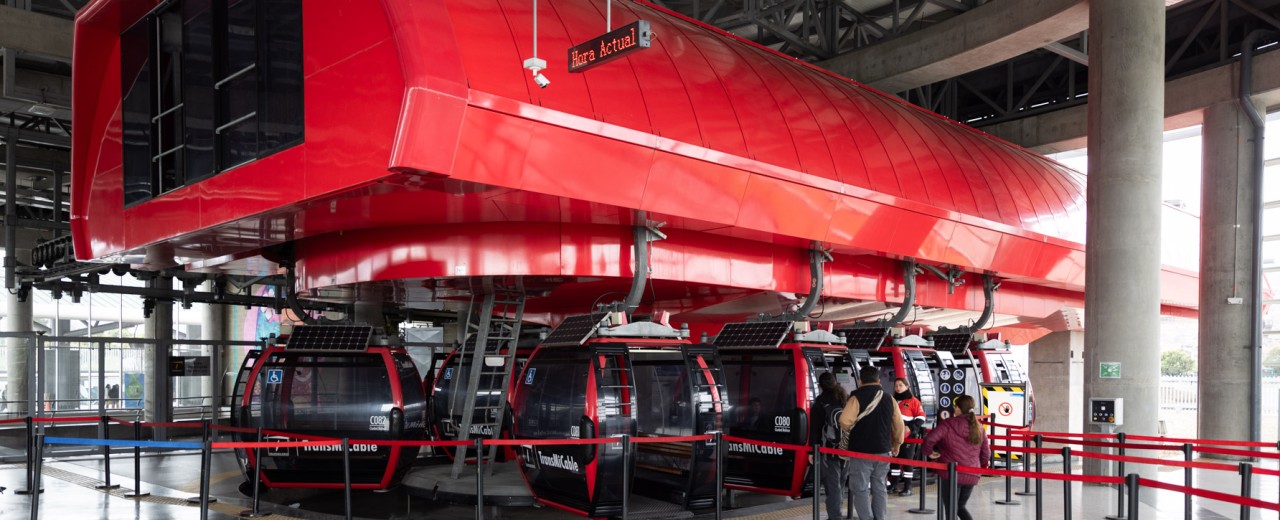
KfW, acting on behalf of the Federal Ministry for Economic Cooperation and Development (BMZ), supports the Colombian government in advancing the implementation of the climate and sustainability agenda in the areas of energy, urban mobility and water. The objective is to make a substantial contribution to achieving the national climate targets (NDCs) and the Sustainable Development Goals (SDGs), thereby strengthening the country’s comprehensive and sustainable development. KfW is promoting the implementation of these objectives through a reduced-interest loan of EUR 150 million and a grant of EUR 2 million for an accompanying measure.
The project is being implemented via the Colombian development bank FINDETER. The immediate target group comprises public and private project developers as well as municipal and regional authorities in Colombia, which lack access to long-term, low-cost refinancing options for sustainable energy, transport and water projects. Indirectly, local financial intermediaries and the population in the cities and regions where the investment measures are carried out will benefit. The funds provided will be used in three key areas of intervention: In the transport sector, projects will be financed that improve urban residents’ access to sustainable and integrated public transport. Climate-friendly energy projects will accelerate the energy transition through the use of renewable power sources, alternative fuels and energy-efficiency measures. In the water sector, projects will support climate change mitigation, adaptation to the impacts of climate change and the preservation of natural resources.
The grant funds will finance an accompanying measure that helps to strengthen FINDETER institutionally as a development bank and provides technical support for selected infrastructure projects. This is intended to ensure the project’s sustainable impact in the long term.
Eligible final borrowers of FINDETER in Colombia are enabled, through on-lent, reduced-interest loans, to implement climate- and environment-relevant investment measures in the areas of energy efficiency, renewable energy generation, sustainable urban mobility and water projects.Through the implementation of these investments in the aforementioned sectors, installed generation capacities from renewable energy sources – and thus the diversification of the national energy mix – will be increased, electricity consumption will be reduced through the use of energy-efficient technologies, the number of low-emission vehicles will rise, and sustainable urban public transport systems (PT) and, for example, bicycle lanes will be newly created, rehabilitated, improved or expanded. At the same time, new or improved projects in municipal water supply and sanitation and, where applicable, waste management will be financed, contributing to climate change mitigation and adaptation to the impacts of climate change in the respective regions, municipalities or districts.The quantifiable impact will be measured by (a) the amount of greenhouse gas emissions reduced annually by the co-financed climate-friendly investment projects, (b) the number of people who benefit from higher resilience to climate risks as a result of the financed climate adaptation measures, and (c) the number of people who benefit from an improved and sustainable provision of public services.
The project contributes to the achievement of the following United Nations Sustainable Development Goals (SDGs):
/SDG-7_EN_Responsive_1080x608.png)
/SDG-9_EN_Responsive_1080x608.png)
/SDG-11_EN_Responsive_1080x608.png)
KfW Group
KfW Development Bank
Regional Department Africa and Latin America

/SDG-6_EN_Responsive_1080x608.png)


Share page
To share the current page content with your network, click the button below and then select the desired option in the dialog box.
Note on data protection: By clicking the button, your browser's sharing function is used. If you select an external provider when sharing, personal data may be processed by the provider. Please read our data protection principles for more information.
Your browser does not support sharing with external services.
Alternatively, you can also copy the short link: https://www.kfw-entwicklungsbank.de/s/enzCBg3h
Copy link Link copied