
News from 2026-02-16 / KfW Development Bank
A boost for the economy through digitalised vocational training
Next level in KfW's long-standing commitment to vocational training in Kenya
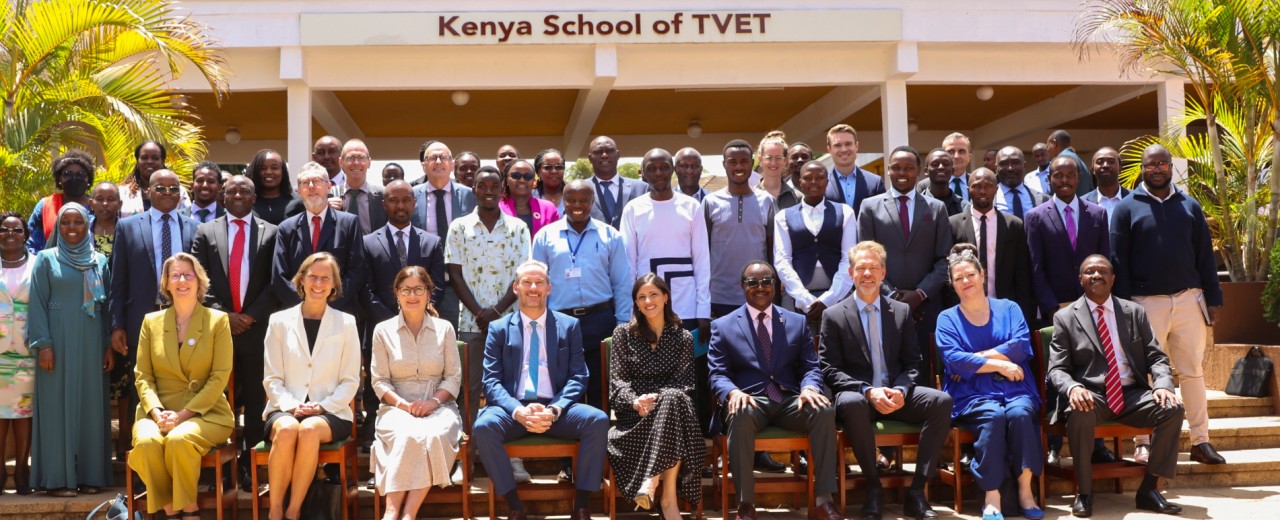
Together with its European JEFIC partners, KfW is promoting high-quality technical and vocational education for Kenyan youth – a strategic investment within the framework of Global Gateway
Together with the French Development Agency (AFD) and the EU, KfW, on behalf of the German Federal Ministry for Economic Cooperation and Development (BMZ), is supporting the Kenyan government in the digitalisation of vocational education and training. The aim of this transformation is to adapt the skills of young people entering the Kenyan labour market to the needs of a digital economy. With their latest joint project, the JEFIC partners KfW and AFD are also contributing to the EU's geostrategic Global Gateway initiative, thereby supporting Europe's resilience, competitiveness, and autonomy.
KfW’s longstanding commitment to the education sector
Kenya is the largest economy in East and Central Africa and an important partner of Germany. With an annual growth rate of around 5 per cent, the resource-rich country possesses high economic potential combined with favorable demographic conditions. The average age is only 20, and approximately one million young people enter the labour market each year. However, youth unemployment tends to be high, as the general level of education often does not meet the required qualifications. This is where the commitment of KfW Development Bank, which has been supporting the modernisation of vocational education and training under the TVET I and II programmes since 2020, comes in. Activites include, among other things, the establishment or rehabilitation, and equipping of seven centres of excellence with workshops at existing vocational schools, the introduction of the dual system in partnership with industry, improved information and communication, and the adaptation of the legal and regulatory framework. The goal is to create at least 660 additional apprenticeships and further qualification and mentoring opportunities for nearly 800 young people annually in Phases I and II. The inauguration of the new workshops is planned this year for Phase I and next year for Phase II.
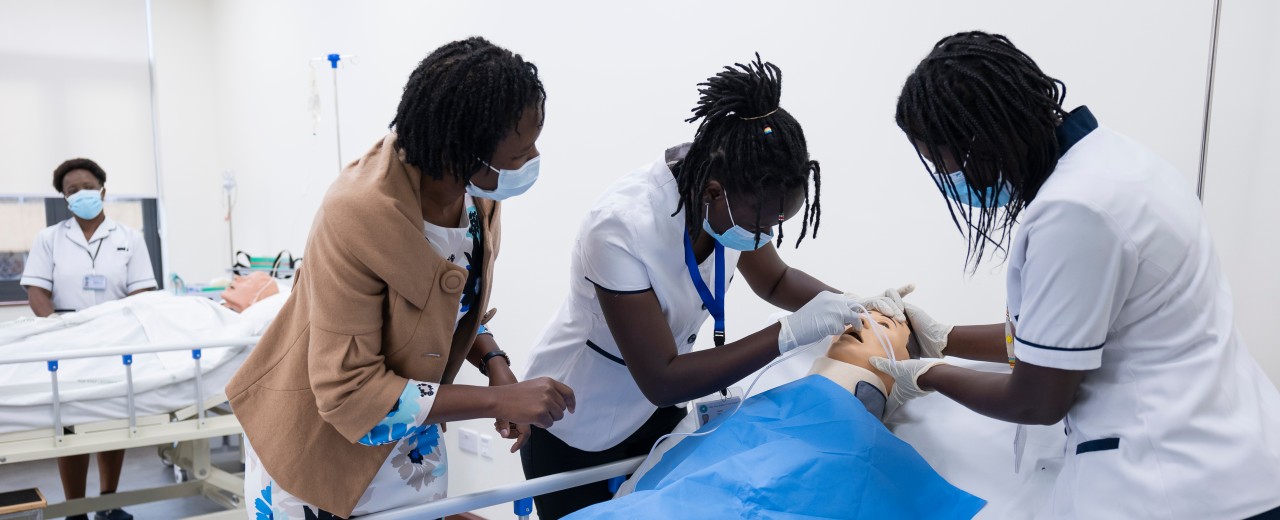
Scholarships for talented but poor young people
Access to modern, future-oriented vocational training, and thus to economic and social participation, often fails because families cannot raise the necessary funds – especially since vocational training in Kenya involves tuition fees and trainees receive no financial support. Therefore, gifted young people can receive scholarships for vocational training through "Wings to Fly". This programme has been supported by KfW, together with funds from the Equity Group Foundation (EGF), in the area of secondary education since 2013 and has been extended to vocational training since 2023. Currently, there are around 800 scholarship recipients who were selected in a nationwide process based on their academic achievements and who are now learning a profession – another 1,200 will follow in the coming weeks and begin their training thanks to "Wings to Fly".
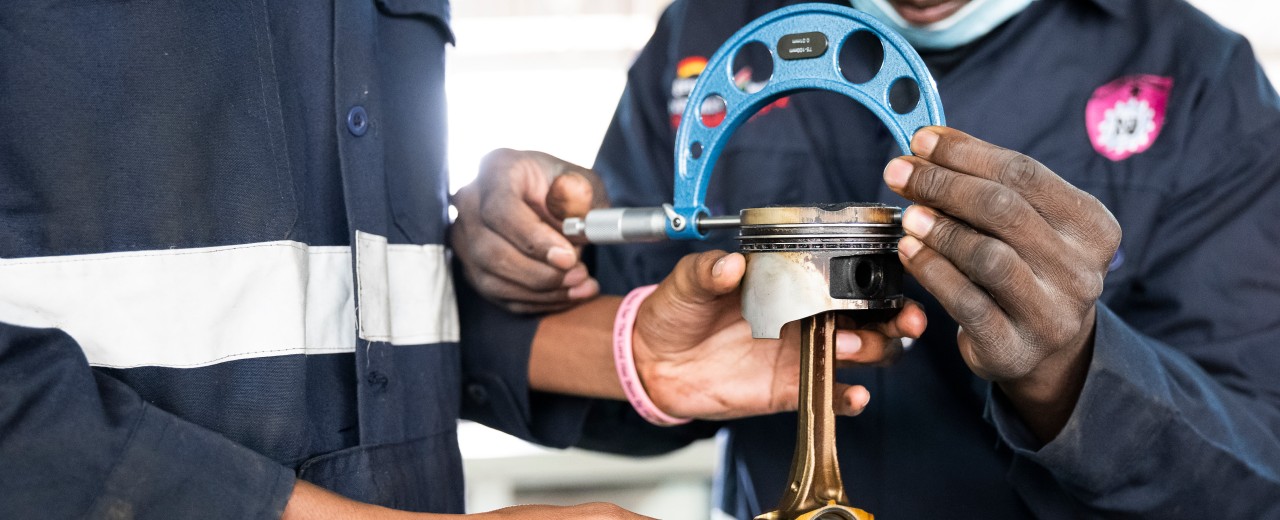
Digital TVET: Next Level in TVET
The digitalisation project that has now been agreed marks a qualitative leap towards the goal of aligning vocational education and training in Kenya even better with the needs of a digitally supported, internationally attractive economy. By 2030, it is planned to equip ten centres of excellence, together with basic digital infrastructure for at least 50 vocational schools, "train the trainer" modules and improved connectivity, including digital services. Financial support for disadvantaged groups through grants or loans for the purchase of equipment is also planned. Indirectly, the project contributes to attracting qualified experts in Kenya and Germany. In 2024, the Federal Government and Kenya signed an agreement to facilitate the migration of skilled workers. David Ohlig from KfW’s Nairobi office welcomes the new ambitions: "After our achievements in recent years, I am delighted that we are now joining forces with our European partners and the Kenyan government to advance the digital transformation of vocational education and training. For the country, this is an important milestone on its path to a strong economy and better quality of life for the young generation, as set out in its Vision 2030."
The project agreements for around 47 million euros were concluded in December 2025. As lead financier, KfW is providing a loan of 28 million euros supplemented by EU funds of 8.85 million euros also implemented through KfW, and 10 million euros from the French AFD. This is also an important step for Germany and Europe in establishing strong, sustainable partnerships in geopolitically challenging times. Education provides a solid foundation for this.

Share page
To share the current page content with your network, click the button below and then select the desired option in the dialog box.
Note on data protection: By clicking the button, your browser's sharing function is used. If you select an external provider when sharing, personal data may be processed by the provider. Please read our data protection principles for more information.
Your browser does not support sharing with external services.
Alternatively, you can also copy the short link: https://www.kfw-entwicklungsbank.de/s/enzBWrMC.DXKA
Copy link Link copied