
Tip: Activate javascript to be able to use all functions of our website
Tip: Activate javascript to be able to use all functions of our website
School meals in Togo
When a school lunch changes lives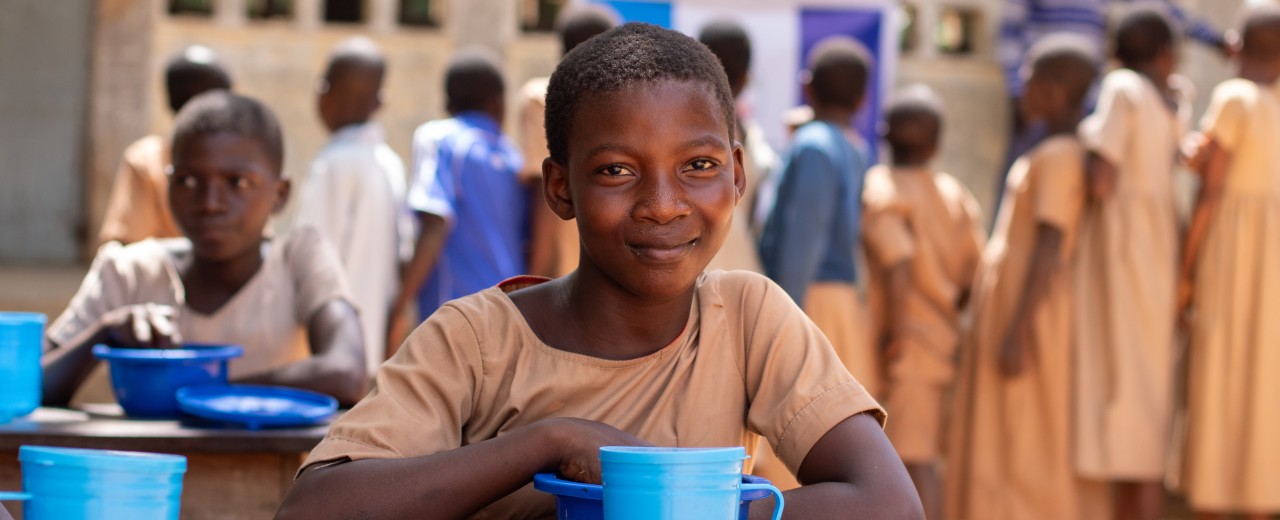
In wealthy countries, a hot meal sometimes only determines one’s mood. In Togo, West Africa, a hot meal often decides the next day of school. It not only satisfies hunger but also makes learning possible. For many children in the small, narrow country between Ghana and Benin, school lunch is the only nutritious meal of the day. A meal that stands for focus, health and the opportunity for a better future.
Togo is one of the poorest countries in the world despite progress in economic growth, investment climate and access to education. About a quarter of the population lives on less than USD 2.15 per day. Of these 25 per cent, around 20 per cent are chronically malnourished. In rural areas in the north, many families rely on small-scale agriculture, which is typically dependent on rain. A risk in times of increasing droughts due to climate change. The situation is exacerbated by a lack of safe drinking water due to insufficient infrastructure and groundwater contamination from wastewater and pesticides, compounded by poor sanitation and weak healthcare systems. Additionally, displacement – primarily of refugees from Burkina Faso and internally displaced persons within Togo’s north – places further strain on the hosting communities’ support systems. These challenges are especially apparent among children. One in five children under the age of five suffers from stunted growth, and many attend school irregularly or drop out of school early.
At the same time, in Togo, as in many parts of West Africa, the chance of change is growing through an above-average young population; more than 60 per cent are under the age of 25. Education is the critical key to breaking the cycle of poverty. However, hunger stands as a formidable barrier to learning.
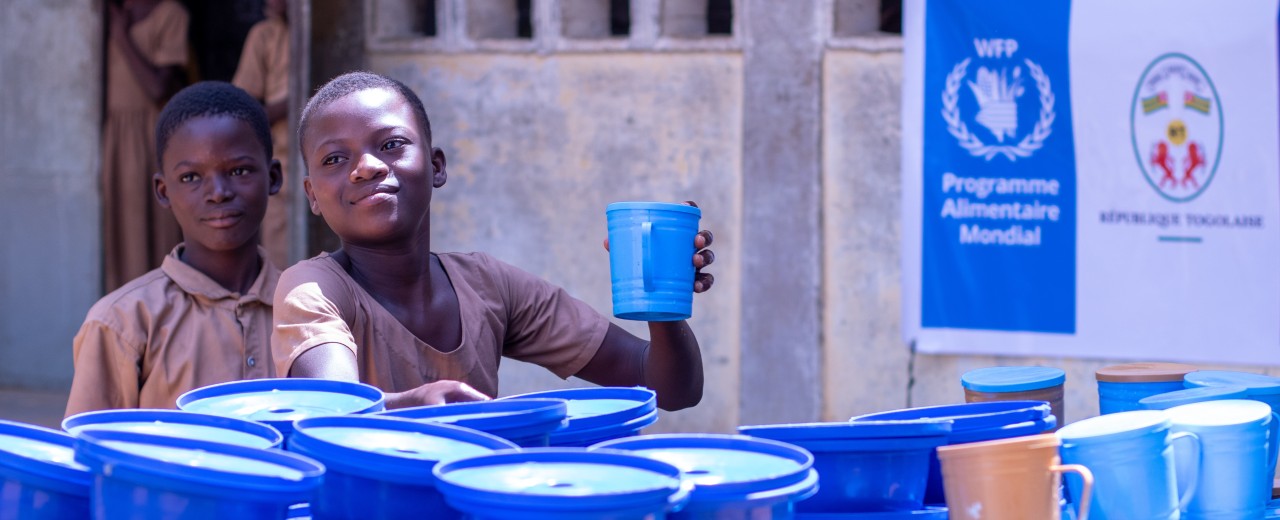
This is where the Togolese Government’s integrated school meals programme comes in, which is funded by KfW on behalf of and with funding from the German Federal Ministry for Economic Cooperation and Development and implemented by the World Food Programme (WFP). It combines school meals with nutrition education and local value creation.
In 141 public primary schools, almost 45,000 children, more than half of whom are girls, will receive healthy meals prepared fresh every day. To support this, school kitchens, school gardens, and small grain mills are being established near the schools. Most of the ingredients come from local agricultural producers and women’s cooperatives. This creates short supply chains and strengthens local smallholder production. A structural, self-reinforcing cycle that revitalizes village economies, guarantees income, and secures nutrition while specifically empowering women and girls.
The project counteracts the existing disadvantages faced by women and girls by relieving mothers of financial and working time constraints, supporting income-generating activities of women’s cooperatives and enabling girls to attend school disproportionately.
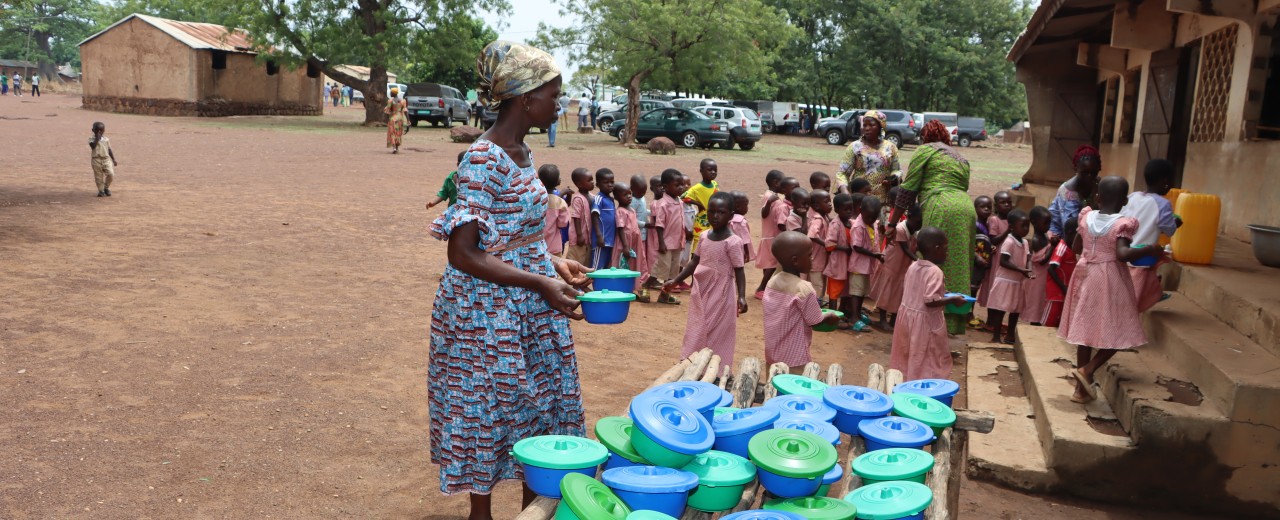
The impact of this initiative is far-reaching. With regular meals, school attendance and learning success increase. Attendance at school is particularly important for girls, who are often the first to have to stay at home in times of crisis.
At the same time, the programme provides teachers, parents and producer groups with important knowledge about healthy nutrition and hygiene. In cooperation with local health centres, deworming treatments are also offered to prevent malnutrition.
Expectations for the programme are clear: less hunger and malnutrition, higher school attendance rates, increased income for local producers and enhanced resilience to crises among communities. It is expected that around 61,000 people will benefit directly and over 78,000 indirectly from the project. For many communities, the programme has a further tangible benefit beyond providing school meals, as it helps strengthening local infrastructure.
At the regional level, the project sends a powerful signal. In West Africa, where climate change not only reduces agricultural yields, but also triggers displacement, integrated approaches like this are gaining importance. They show that food security, education and local development are intrinsically linked. A secure meal at school serves as an anchor—keeping children in the classroom, safeguarding their health, and opening up new opportunities where none existed before.

Share page
To share the content of this page with your network, click on one of the icons below.
Note on data protection: When you share content, your personal data is transferred to the selected network.
Data protection
Alternatively, you can also copy the short link: https://www.kfw-entwicklungsbank.de/s/enzB_ACS
Copy link Link copied