
Tip: Activate javascript to be able to use all functions of our website
Tip: Activate javascript to be able to use all functions of our website
Climate Resilience East Africa
When Climate Becomes a Class Question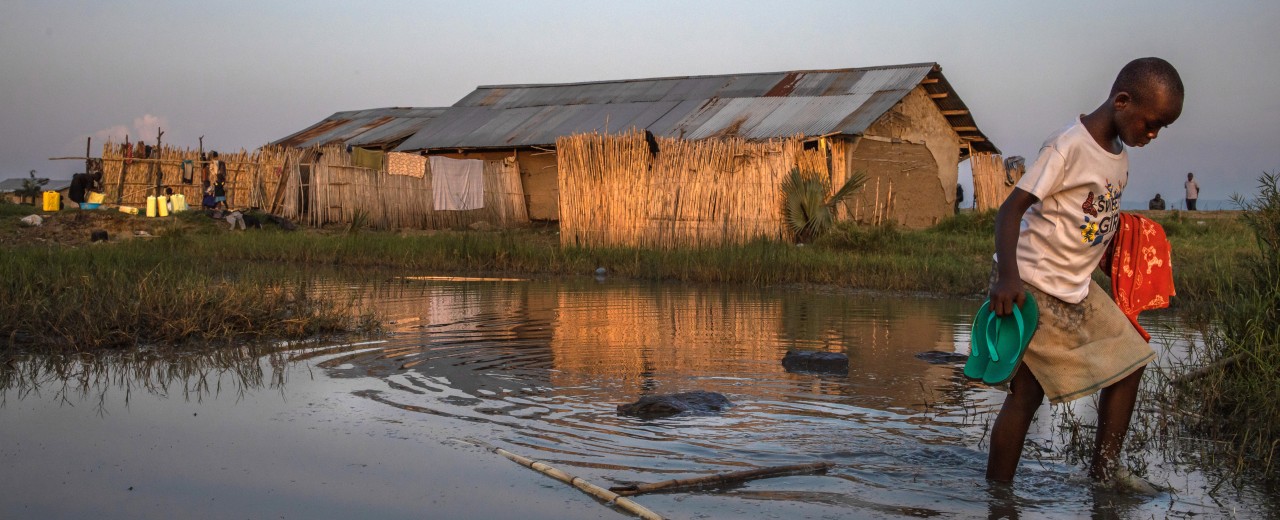
There are places where the thermometer has long since indicated the future. 40 to 50 degrees Celsius in the shade, dry soils, parched rivers and children who have to stay at home because their schools have become too hot. In East Africa, the climate crisis has gone from an abstract scenario to everyday life, destroying schools, fields, and future plans. Climate change poses enormous challenges for everyone in the region and hits hardest those who are least to blame: children.
Climate change is exacerbating existing wounds in the region: poverty, hunger, conflicts. It paralyses educational institutions, destroys crops, forces families to flee. Millions of children live without clean water, without regular education, and without adequate access to health and essential social services. Those who do not go to school any more lose far more than just learning material and girls in particular can quickly find themselves on the sidelines of society, as parents often stop sending them to school when times are harsh. Despite this situation, most global climate finance is channeled into large-scale technical or economic projects, rarely into programmes that directly protect children. This is exactly where the initiative by UNICEF and KfW Development Bank comes in. Under the title "Climate Collaboration for Children" (CC4C), targeted measures in four particularly affected countries in the region are to help strengthen children’s resilience to the impacts of climate change.
Eight project ideas for child focused climate adaptation in Ethiopia, Kenya, Somalia, and South Sudan are being developed as a key outcome of this programme. The idea is to design education, infrastructure, water, and health care to last in a hotter, more unpredictable world. The individual projects are realised in cooperation with governments, municipalities and local partners and in accordance with the respective conditions on the ground. Once the funding is in place, the plan is to build climate-resilient schools and health stations for displaced children in Ethiopia, combined with climate-smart agriculture to ensure food security. In Kenya, the aim is to strengthen social services and early warning systems that are important for the country in which climate migration has become a reality. In Somalia, adaptable social protection systems are being prepared, as well as food security in coastal areas and emergency plans for schools that can provide assistance in the event of floods.
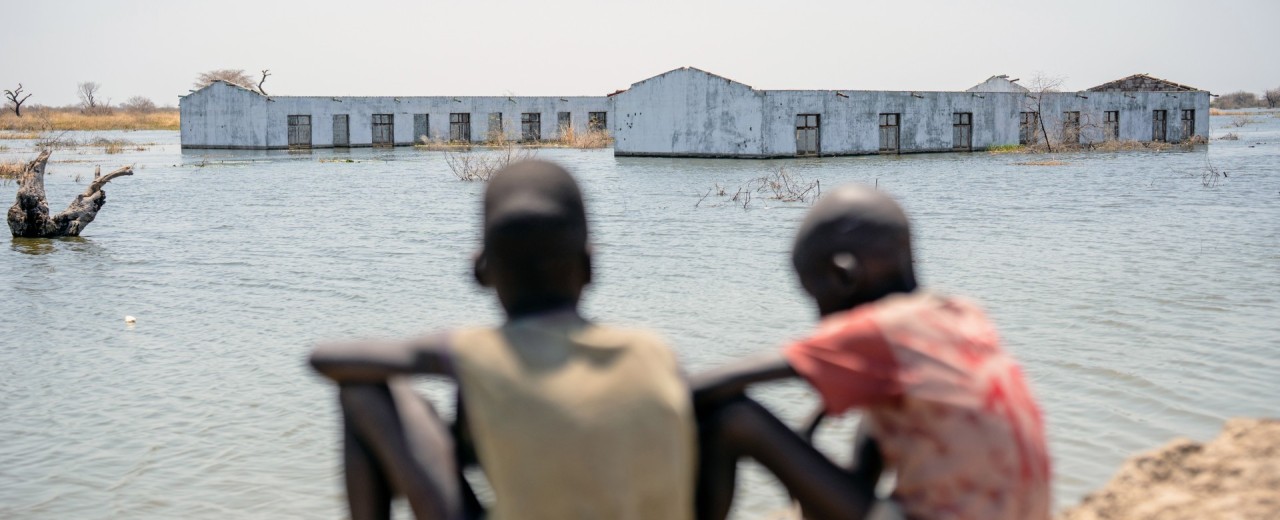
In South Sudan, schools are to be built that will withstand the heat and offer children a continuous space to learn. The project will combine structural, technological and operational measures: Reflective roofs, ventilation and shaded areas lower temperatures, solar systems generate energy for electricity and water, so-called WASH systems (water, sanitation and hygiene) use rainwater and ensure clean sanitation. Training for teachers and communities, mobile classrooms, digital learning opportunities, and on-site health and nutrition services are stabilising capacities and services. Climate working groups for pupils, tree planting, participation of parents' and school committees in operation and maintenance are also planned; all of this anchors education and learning in the social environment.
Another new feature will be real-time monitoring: sensors will measure changes in classroom temperature, and absences will be recorded in an absence log. This will make it possible to check whether the measures are effective. Local communities and businesses also benefit – for example, through water charges, the sale of surplus solar power, cooperation with local construction companies, or the use of local materials.
CC4C sees itself as a laboratory for new forms of cooperation. The initiative aims to show that development, climate and social policies can no longer be separated. It is looking for ways to combine public and private capital. At the Africa Climate Summit 2025, CC4C was already presented as a model for child-centred climate adaptation. In the long term, it is about more than pilot projects. KfW and UNICEF want to create a structure that is transferrable as a climate adaptation architecture for children worldwide. Once the funding is in place, the programmes could quickly be implemented on a larger scale.
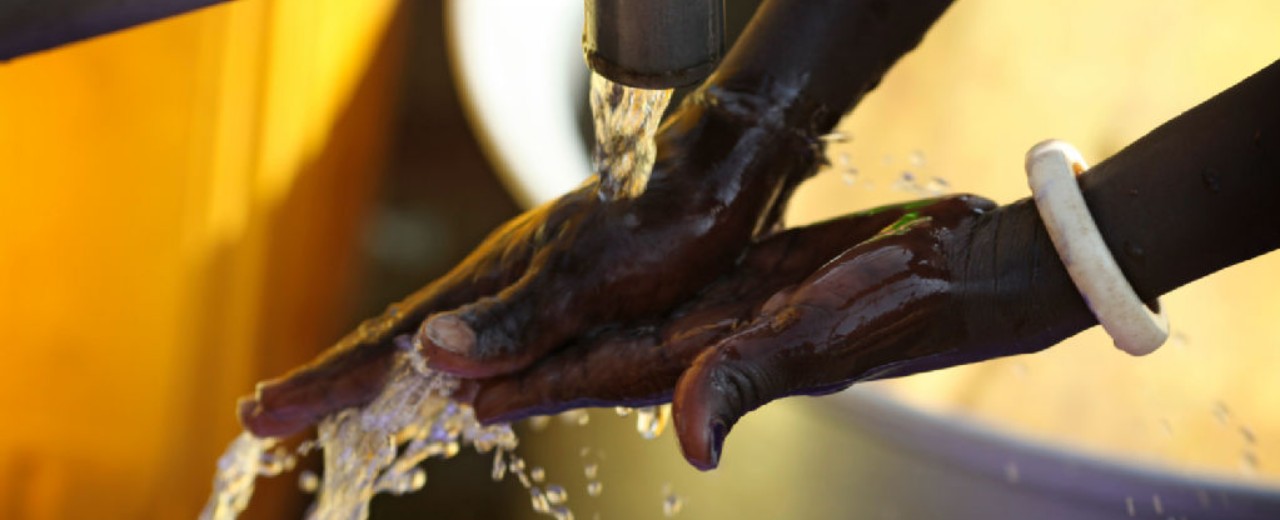
Another project currently co-financed by KfW on behalf of BMZ, demonstrates that such approaches work: The regional R-WASH programme led by UNICEF and UNHCR is improving water and sanitation services for refugees, internally displaced persons and their host communities in Ethiopia, Somalia and Sudan. The programme focuses on robust, climate-resilient infrastructure and strengthens local water companies, and includes a pilot project for groundwater recharge in Dollow, Somalia. Where competition over scarce resources once posed a serious risk, displaced people and host communities now share reliable access to clean water—fostering mutual trust, stabilising coexistence, and reducing the likelihood of further displacement and migration.
The CC4C initiative now wants to think about such projects in South Sudan and the other three countries, across borders, disciplines, and funding logics, and from the perspective of those who have the least to say and yet lose the most.

Share page
To share the content of this page with your network, click on one of the icons below.
Note on data protection: When you share content, your personal data is transferred to the selected network.
Data protection
Alternatively, you can also copy the short link: https://www.kfw-entwicklungsbank.de/s/enzB9Vzd
Copy link Link copied