
Tip: Activate javascript to be able to use all functions of our website
Tip: Activate javascript to be able to use all functions of our website
Interview with Lorenz Gessner
Inspired by Germany’s KfW, Ukraine builds its own development finance institution to unlock direct EU fundingUkraine successfully completes the transformation of National Development Institution based on Germany’s KfW model and advances towards directly accessing EU funding for the first time.
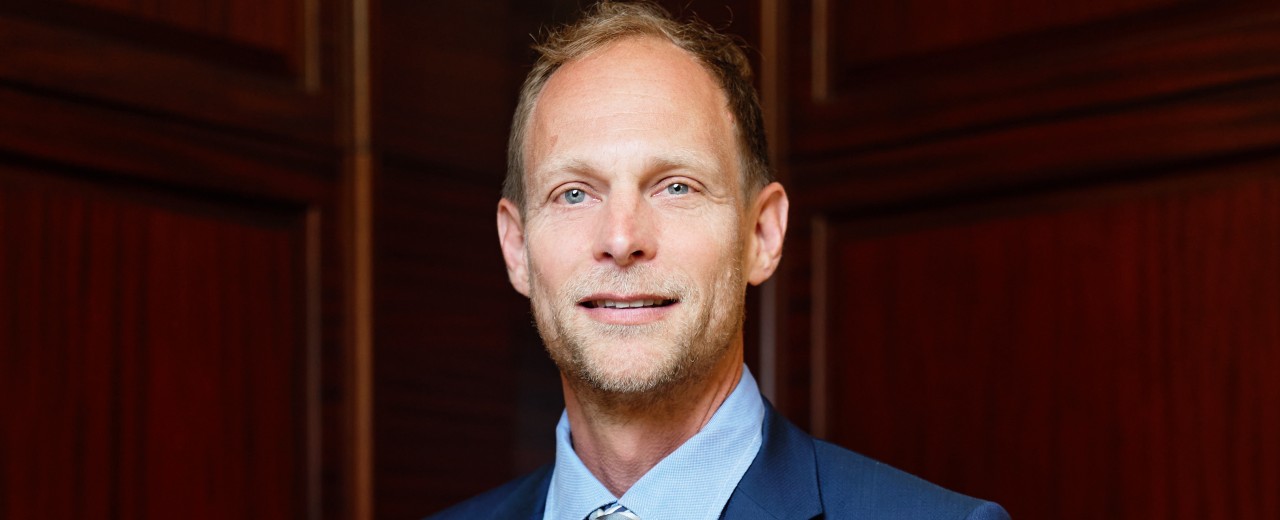
In an interview for Radio NV, Lorenz Gessner, Director for Ukraine and Moldova at KfW Development Bank, outlines how the transformation of the Business Development Fund into the National Development Institution (NDI) could unlock EUR 1.3 billion in funding and generate up to EUR 3.3 billion in loans for Ukrainian businesses.
This transformation goes far beyond a routine institutional upgrade. It represents the creation of a modern development finance infrastructure in Ukraine.
The National Development Institution (NDI) is being designed as a specialised financial entity that operates under banking standards of governance, transparency and financial discipline, but with a fundamentally different mandate from commercial banks.
Unlike profit-driven institutions, it focuses on development impact. It does not compete with commercial banks but works through them, enabling lending to higher-risk segments such as small and medium-sized enterprises, frontline businesses and strategic sectors. As a non-profit entity, NDI reinvests all profits back into financing Ukraine’s development goals.
I believe that it’s a profound game-changing reform. KfW, together with the German and Ukrainian governments, the European Union and the World Bank, is supporting this process.
Worth noting, this reform stands on the shoulders of KfW’s lasting support: funded by the German Government and the European Commission, we support NDI in parallel in two areas. First, funding. We provide financial resources to improve access to finance for SMEs. Second, technical assistance. We support the institutional development of NDI itself.
So far, KfW has provided more than EUR 228 million, with an additional EUR 230 million currently being prepared for the new wave of projects.
Over the past quarter of a century, the institution has evolved from the German-Ukrainian Fund into the Business Development Fund and now into NDI.
The earlier stages were primarily focused on capacity building. At that time, Ukrainian banks had limited experience in SME lending, and international support was directed toward training, technical assistance and the introduction of modern credit practices. This included programmes such as “Affordable Loans 5–7–9%”, which were implemented with KfW financing.
The current transformation marks a shift into institutional maturity. NDI is no longer just an implementing body; it is becoming a strategic partner of the Ukrainian state.
It will now contribute to programme design, conduct sector analysis and act as a competence centre for development finance, similar to the role KfW plays in Germany.
Legally, the institution has also been significantly strengthened. A dedicated law adopted in October 2025 established its framework, while its governance structure now follows OECD standards with a Supervisory Board composed mostly of independent members.
NDI has set ambitious targets for the coming years. It aims to mobilise around EUR 1.3 billion in funding, which is expected to generate approximately EUR 3.3 billion in SME lending through partner banks.
This leverage model means that every euro of external financing can translate into nearly three euros in investments for Ukrainian businesses.
The institution will operate through three main instruments. It will provide long-term liquidity to banks, enabling them to issue longer-term loans to businesses. It will also actively apply portfolio credit guarantees to stimulate lending in high-risk or frontline regions, and it will offer grants to co-finance investment projects.
Compared to existing programmes, financing is expected to become more accessible, longer-term, more precisely targeted and tailored to high-potential value chains. Special attention will be given to frontline territories, as well as women-led and veteran-led enterprises.
The transformation of the institution follows the Vision 2.0 roadmap, which was presented at the Ukraine Recovery Conference 2024 in Berlin and is supported by Germany, the European Union and the World Bank.
The roadmap consists of three stages. The first stage, focused on institutional reform and legal independence, is largely complete. The second stage involves the EU Pillar Assessment, which evaluates whether the institution meets EU standards for managing EU funds. The third stage foresees access to capital markets through bond issuance and long-term financial sustainability.
However, the first stage will only be truly complete when NDI develops the capacity to evaluate the real impact of its programs, which is prerequisite to designing effective support programs. Once this capacity is built, NDI will cooperate with the Ukrainian Government following the KfW model.
The ultimate goal of Vision 2.0 is to establish a fully functional development finance institution that can serve as a central coordination point for government programmes and international donors.
KfW continues to support the process through technical assistance, advisory work and upcoming preparations for the EU Pillar Assessment. We plan to sign a related grant agreement already at the upcoming URC 2026 in Gdansk with financing from the German Federal Ministry of Finance (BMF).
The KfW model is based on four core principles that are central to the design of NDI.
The first is a clear and stable legal mandate that ensures institutional continuity and autonomy. The second is a strong capital base that enables long-term financial stability. The third is professional governance with a supervisory structure that includes independent oversight. The fourth is a commitment to long-term sustainability, including strict environmental, social and governance standards.
Together, these principles allow KfW to function both as a crisis-response institution and as a long-term development engine. The NDI is being built on the same foundation.
Institutional independence in development finance does not mean separation from the state. Both KfW and NDI are state-owned entities, with mandates defined by government policy.
The state sets strategic priorities, while the institution retains autonomy in designing and implementing financial instruments.
Based on KfW’s experience we know that cooperation between the government and the development institution works well when it’s a “two-way street” - the government sets the guidelines, the institution then develops specific programs, often drawing on research from its own economic analysis department and exchanges with business associations. Entrusting NDI with designing the support programs would result in efficient division of labor, relieving the ministries of highly specialized expert workloads.
This balance is maintained through several mechanisms, including a detailed legal framework that protects operational independence, a supervisory board with a majority of independent members, and a clear division between political decision-making and technical implementation.
Such structure is essential for stability, especially in countries undergoing political or economic transition.
Speaking of interaction with the Ukrainian Government, I must highlight a very positive trend. All recent milestones, from launching the Vision 2.0 to announcing the NDI Strategy 2030, were accomplished in close cooperation with the current teams at the Ministry of Finance and the Ministry of Economy. We look forward to continuing this dynamic partnership. Our next major target is helping NDI prepare for and successfully pass the EU Pillar Assessment.
"Cooperation with KfW is important for Ukraine as it supports the Government in maintaining financial stability, provision of basic public services and advancing key reforms despite the challenges caused by aggressor's full-scale invasion. Together, we focus on strengthening and protecting the energy system, restoring municipal and social infrastructure, building housing for internally displaced persons, and modernizing vocational education and medical institutions. A special priority of our synergy is grant and loan assistance to micro, small, and medium-sized businesses, which gives Ukrainian entrepreneurs the resources to work and maintain jobs even in de-occupied and frontline territories. Development of NDI is a clear example of what this collaboration makes possible. The Ministry of Finance highly values this partnership and looks forward to further expanding cooperation in areas that are essential for Ukraine's recovery, modernization and EU integration."
The EU Pillar Assessment is a comprehensive evaluation of an institution’s internal systems, including governance, financial management, auditing and control mechanisms, grant management and procurement procedures.
Passing this assessment is a prerequisite for managing EU funds directly.
For Ukraine, this step is particularly significant because it would allow NDI to become the first domestic institution capable of receiving and managing EU financing without intermediaries.
KfW itself has successfully passed this assessment and currently plays a role in channeling EU funds to Ukraine through existing structures.
There’s one more significant benefit for NDI’s reputation - successful accreditation with EU signals to local and international investors that NDI is a reliable bond issuer.
At present, EU funding for Ukraine is primarily channelled through international financial institutions that have already met EU standards.
Direct access would allow EU funds to be transferred straight into Ukraine’s financial sector via NDI.
This would simplify implementation, reduce administrative layers and associated operational costs, and significantly increase the speed and scale of financing available for small and medium-sized enterprises as well as reconstruction projects.
The main challenge lies in speed and simultaneous institutional reform.
While similar institutions in Europe often require several years to pass the EU Pillar Assessment, Ukraine is attempting to do so under wartime conditions and at a much faster pace.
This requires parallel upgrades in governance, audit systems, IT infrastructure and risk management.
Fortunately, the NDI management team is tried and tested by previous transformation projects. They are well-prepared for this new challenge while risks related to human capital are already anticipated in NDI’s Strategy 2030. Also, the technical assistance project we are financing and helping implement focuses heavily on this upfront preparation.
However, the process is not a single examination but an iterative one. If the assessment is not passed on the first attempt, the institution receives feedback and continues the process.
Even the process itself is already valuable because it accelerates institutional development and strengthens public financial systems.
KfW has worked in Ukraine for more than 25 years, and two key lessons stand out.
In the 1990s, early technical assistance helped Ukrainian banks develop modern SME lending capabilities. After 2014, cooperation increasingly focused on risk mitigation and support for businesses in frontline communities and displaced persons, energy efficiency and general modernization.
Since the full-scale invasion in 2022, these lessons have become central to designing financial instruments that can function under wartime conditions.
Over the next two years, KfW will continue providing substantial financing through NDI to support Ukrainian SMEs.
A major new initiative is the Industrial Ramstein programme, launched jointly with Ukraine’s Ministry of Economy and Germany’s Federal Ministry for Economic Cooperation and Development (BMZ). It begins with an initial EUR 30 million seed contribution aimed at supporting industrial modernization.
The programme is expected to expand further with participation from the European Union and other international partners. Its goal is to integrate Ukrainian industry more deeply into European value chains and support long-term economic recovery.
Our institutional cooperation with the Ukrainian side has been incredibly fruitful and promising. We have built an aligned vision, a strong action plan, and mutual trust.
If I could offer just one core recommendation, it would be this: stay deeply focused on the institutional maturity of NDI.
Treat it as a vital strategic partner for the State. Ensure that the institution receives sufficient resources, especially by the Ukrainian government itself, to build up its capital base. By the way, we are more than delighted that the Ukrainian Government is planning a new significant capital injection of EUR 140 million into NDI in 2026, which is supported by a KfW loan and an EU guarantee.
Development finance institutions are incredibly powerful instruments, but like any sophisticated systems, they require the right long-term commitment and proper utilization. Only then can NDI fulfill its maximum potential to accelerate the recovery and development of the Ukrainian economy.
Ultimately, institutional maturity breeds economic prosperity, not the other way around.

Share page
To share the current page content with your network, click the button below and then select the desired option in the dialog box.
Note on data protection: By clicking the button, your browser's sharing function is used. If you select an external provider when sharing, personal data may be processed by the provider. Please read our data protection principles for more information.
Your browser does not support sharing with external services.
Alternatively, you can also copy the short link: https://www.kfw-entwicklungsbank.de/s/enzCA4HF
Copy link Link copied