
Tip: Activate javascript to be able to use all functions of our website
Tip: Activate javascript to be able to use all functions of our website
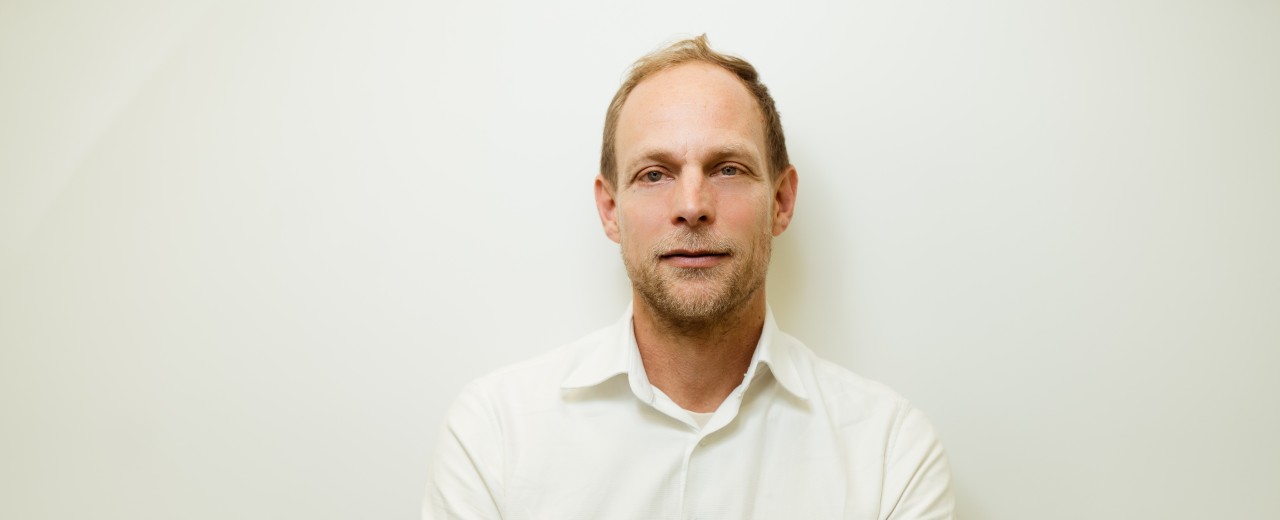
Interview with Lorenz Gessner
Support for Ukraine’s energy sector is a priority for the German government – KfW Office in UkraineGermany’s state-owned development bank KfW has been operating in Ukraine for almost three decades, financing projects with a total value of around €1.5 billion over that period. These investments span the energy and financial sectors, as well as a range of socially significant areas – including housing construction, municipal infrastructure, vocational education, and healthcare.
What motivates the bank and its team to remain committed to Ukraine, which new areas of work are planned for launch in 2026, and how Ukraine can collectively navigate the current crisis in its energy system – these questions are addressed by Lorenz Gessner, Head of the KfW Office in Ukraine.
Over the past two years, I have visited Ukraine around six times, so this was far from my first trip. I also travelled to Ukraine occasionally in the 2000s, which gives me a certain basis for comparison. The first thing that stands out is how much more difficult it has become to travel to and from the country. Despite this, it was a pleasure to meet our partners again and, more broadly, to see Ukrainian cities and the people living in them.
They have demonstrated a remarkable level of resilience given the circumstances and remain committed to the projects we are implementing in Ukraine on behalf of the German government and the European Union. We see that the Ukrainian government and other institutions continue to function and are advancing an ambitious reform agenda with an intensity greater than ever before. Everyday life also appears relatively normal – as normal as it can be under the current conditions: people go to work, businesses operate, and the economy continues to function.
The KfW Group is Germany’s state-owned development bank and the country’s fourth-largest financial institution by total assets. The Group comprises several entities: some focus on financing domestic projects within Germany, while others operate internationally, including in Ukraine. My own work is currently concentrated on international financing, as this is particularly important and relevant for Ukraine and its people.
Within the Group, it is KfW Development Bank that, on behalf of the German government and the European Union, provides financing for key infrastructure and services. This support is directed primarily to partner organisations that are state or municipal institutions, as well as state- or municipally owned enterprises, in developing countries and economies in transition. At the same time, KfW’s subsidiaries – DEG and KfW IPEX-Bank – support private-sector companies.
Overall, we are the largest bilateral development finance institution in terms of the volume of funding provided to Ukraine. Our core mission is to support Ukraine’s resilience and its economic growth.
We first entered Ukraine in the mid-1990s. Since then, our presence has gradually expanded – as has the number of projects we implement. KfW’s tasks and responsibilities have diversified in line with the German government’s strategic approach towards Ukraine, which has evolved in response to changes in the situation and the needs of your country.
One of our very first projects was the establishment of the German-Ukrainian Fund, which operated under the name Business Development Fund (BDF) until the end of 2025 and, as of 1 January 2026, became the National Development Institution (NDI). This is, incidentally, a clear illustration of how long-term, resilient and forward-looking some of our projects have proven to be.
In short, we work with the Government of Ukraine and a range of other partner organisations, providing project-based financing in the energy and financial sectors, in housing and municipal services, as well as in social infrastructure and a number of other areas.
Energy has been one of the sectors we supported even before the war, but our cooperation has intensified significantly since then. Over the past four years in particular, it has become increasingly clear just how critical the energy system is, given the frequent power outages, infrastructure destruction and prolonged blackouts. At the same time, we have identified specific areas in which to support Ukraine in this field.
It can be said with confidence that the energy sector remains one of the top priorities for both the German government and KfW. Our primary focus is to help build a modern energy supply system that is resilient to further attacks. One of the key projects in this area is our cooperation with Ukrenergo, which began in the early 2010s and represents yet another example of a successful long-term partnership.
At present, the main emphasis is on strengthening the resilience of the energy system, while KfW also stands ready to support Ukrenergo during the recovery phase and in its further development. Since the start of Russia’s full-scale invasion, KfW has provided more than €450 million in financing for Ukrenergo on behalf of the German government and the European Union, and we are prepared to continue this work. These funds have been used to restore the energy system after Russian attacks and to install drone protection at key transmission substations – that is, substations operated by Ukrenergo itself.
In addition, the German government, through KfW, supports the Ukraine Energy Support Fund, which is managed by the Energy Community Secretariat. This fund pools financial contributions from governments, international financial institutions and private donors interested in stabilising Ukraine’s energy sector. As of early 2026, the German government, via KfW, has contributed more than €390 million to this fund.
There is no doubt that corruption scandals do not contribute to a positive environment in any way. As a financial institution whose main donor is the German government – and with the European Union as an intergovernmental partner – we are extremely sensitive to such issues and take them very seriously. This is not only a matter of reputation, but also of financial risk for KfW and for Germany.
That is why we closely monitor all such cases. KfW follows a zero-tolerance policy towards any direct or indirect forms of corruption, fraud, money laundering, illicit financial flows or terrorist financing that could be linked to our projects. All of this is completely unacceptable. We have invested substantial resources in Ukraine’s energy sector and, fortunately, have not encountered corrupt elements in our own projects so far. At the same time, the very existence of such cases is a worrying signal.
We apply a broad range of regulatory tools and safeguards to assess and mitigate corruption risks. For example, we never transfer the full amount of financing to recipients upfront. Instead, we usually make direct payments to contractors – and only after the work has actually been completed. We also do not channel funds through the state budget for onward transfers to companies; rather, we work directly with the companies in question.
Ukraine’s energy system is a legacy of the Soviet era. Its infrastructure was designed for much higher levels of industrial consumption than are actually required today. For example, the number and capacity of substations exceeded real needs several times over. In a sense, this legacy even has certain advantages under current circumstances: if one substation is damaged by Russian attacks, another can be brought into operation. This is one of the reasons why the system as a whole remains manageable and electricity supply continues to function.
In the medium term, in my view, the system needs to become more decentralised, while more sophisticated models of electricity generation and consumption should be rolled out across the country. The key elements of such a rethought energy system must be protected by structures that are sufficiently effective yet economically justified. This will reduce vulnerability to military action and help key consumers – communities and industrial facilities – become more resilient.
Of course, it is also essential to maintain a focus on the further development of renewable energy and battery energy storage systems (BESS), as well as on improving energy efficiency.
I believe we are seeing tangible progress in the development of renewable energy, particularly in the private sector. Many companies are investing in fairly large-scale wind and solar power plants, as well as substantial energy storage capacities – for generating, storing and feeding electricity into the grid. At the same time, households and small and medium-sized enterprises are responding to power outages by installing solar panels, inverters and batteries, thereby achieving an acceptable level of energy resilience.
Both large and small participants in this energy transition have access to relatively affordable financing for such investments. Of course, the pace could be faster, but wartime conditions significantly complicate matters. At the same time, work continues to restore damaged overhead transmission lines and substations, as well as to expand cross-border interconnectors between the EU and Ukraine – which allows for increased electricity exports and imports alike – all of which requires significant expenditure.Originally published in Ukrainian in New Voice magazine
Moreover, procuring new equipment to replace what has been destroyed or damaged is not always straightforward: much of it has to be manufactured at plants whose production capacity is booked years in advance. Taking all these factors into account, I would say that, under wartime conditions, the current pace is generally respectable.
In the post-war period, Ukraine will need sound corporate governance, effective market-based pricing mechanisms and a healthy business climate, including the rule of law. Taken together, these elements will help Ukraine attract large-scale investment and achieve a sustainable level of energy security.
For example, in July 2025, as part of our cooperation with the Business Development Fund, we signed a new grant agreement worth €40.5 million aimed at supporting small and medium-sized enterprises. This programme is financed by the German government and seeks to improve access to finance for Ukrainian micro-, small and medium-sized businesses, with a particular focus on de-occupied territories and regions most affected by the war.
We also support the vocational education sector. This includes modernising vocational education institutions, equipping them with modern facilities and transforming them into reliable partners for the private sector. Together with the Ministry of Education and Science of Ukraine, we are establishing centres of excellence at such institutions in various regions of the country. Around 15 institutions have already received support through financing from the European Union and the German government.
In addition, we are very active in the field of social infrastructure. In particular, we finance housing for internally displaced persons and others affected by the war – through the reconstruction of existing buildings, the construction of new housing, or the provision of preferential mortgage loans, enabling IDPs to secure a roof over their heads. We also support healthcare facilities by modernising them and equipping them with modern equipment, reconstruct kindergartens, and upgrade municipal water supply infrastructure.
In projects implemented through UNICEF, we seek to prioritise the needs of children and their families. Overall, we work across a very broad range of areas and have even more projects at various stages of preparation within each of them.
First and foremost, we remain committed to supporting Ukraine. We have already secured funding sources for new projects for the coming year. Naturally, work across all the areas mentioned above will continue, but new priorities will also emerge.
Among them, I would highlight potential cooperation with the Ministry of Health in the field of rehabilitation. We aim to do more in this area. For us, it is a new but extremely important field, and it also demonstrates our effort to adapt our work to Ukraine’s evolving needs.

Share page
To share the current page content with your network, click the button below and then select the desired option in the dialog box.
Note on data protection: By clicking the button, your browser's sharing function is used. If you select an external provider when sharing, personal data may be processed by the provider. Please read our data protection principles for more information.
Your browser does not support sharing with external services.
Alternatively, you can also copy the short link: https://www.kfw-entwicklungsbank.de/s/enzB4bkx
Copy link Link copied