
News from 2026-05-08 / KfW Development Bank
KfW remains a strong partner for Europe in development cooperation
Serving Europe’s economic and geostrategic interests on a fair-play basis, climate protection and sustainable global goods for all
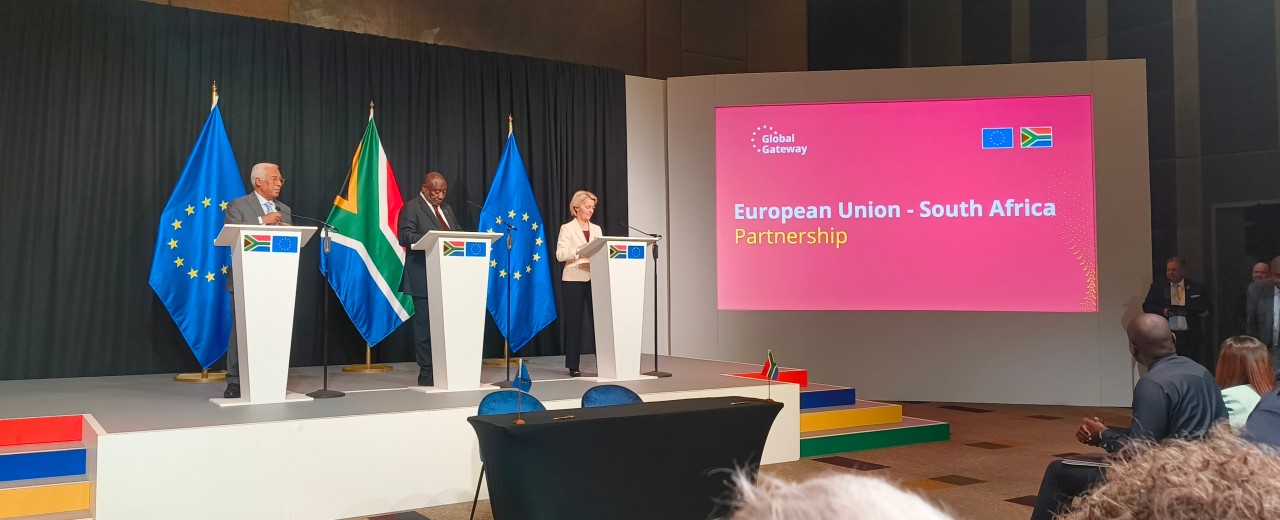
While the geopolitical situation is changing dramatically worldwide, solidarity and value-based cooperation remain a constant of KfW’s European commitment in development cooperation. In 2025, the Bank, together with its Team Europe partners, continued to make a significant contribution to financing sustainable, forward-looking investments in partner countries – which always also contribute to European interests, security and resilience in an increasingly fragile world.
The focus is on the EU’s Global Gateway Initiative, which is to mobilise a total of EUR 300 billion between 2021 and 2027 for projects in strategic areas worldwide: climate action, clean energy and transport, health, education and digital are to pave the way to a sustainable global future. By the end of 2025, KfW had contributed almost EUR 43 billion to this – almost 15 per cent of the total volume. But what serves global progress also strengthens European interests and relations with partner countries in geopolitically important regions. Functioning supply chains, security of energy supply, development of raw material sources and markets for European companies are preparing the ground not only for prospects and employment in less rich regions, but also for the economic strength and sovereignty of Europe itself.
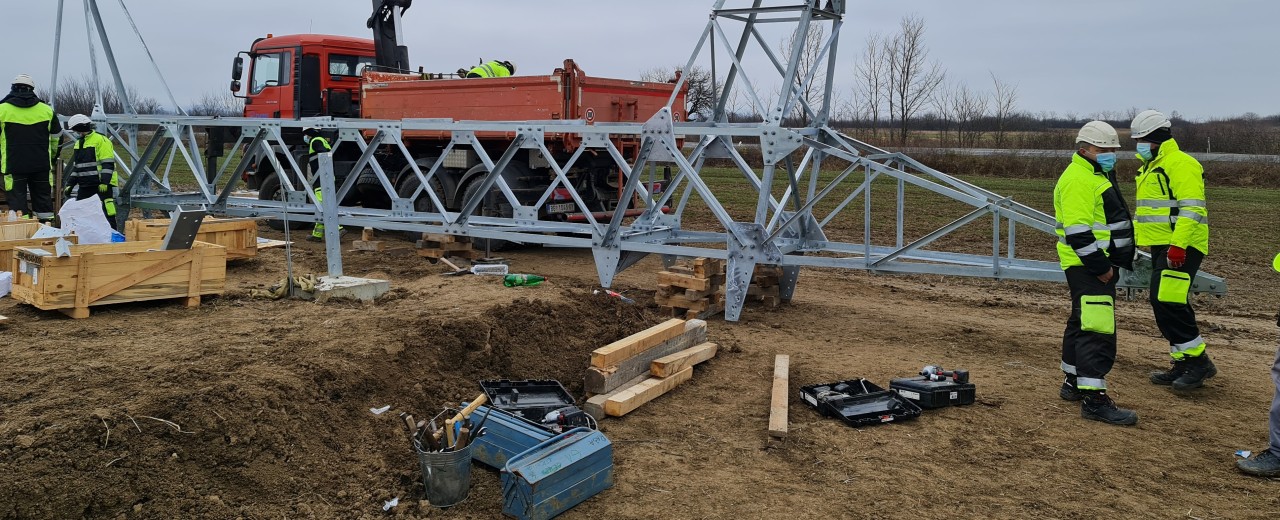
Climate protection and energy supply at the top
Climate and energy accounted for about half of the total, benefiting mainly projects in Asia and sub-Saharan Africa, but also in Europe and the Caucasus region. KfW is helping to create the Trans-Balkan Corridor for the expansion of the regional electricity grid in south-eastern Europe. Hundreds of kilometres of new power lines, substations and switchgear are created to better connect the region and enable the use of more electricity from renewable energy sources. Like various wind farm projects in Bosnia-Herzegovina, they also serve a political goal, namely to bring EU neighbouring countries and accession candidates closer together and to secure a sustainable electricity supply in Europe.
First pumped-storage hydroelectric power station in Vietnam
In Asia, the first pumped storage power plant in Vietnam is being built in the Bac Ai region. It is part of the Just Energy Transition Partnership (JETP) with Vietnam, which focuses not only on the transition to renewable energy, but also on the concept of public electricity supply on economically and socially fair terms. Among other international donors, KfW works here in conjunction with the bilateral development banks of France (AFD) and Italy (CDP), with which it has founded the JEFIC partnership which also includes Spain (AECID) and Poland (BGK) - another advantage for the EU, allowing for synergies from the pooled experience and global networking of national financial development institutions.
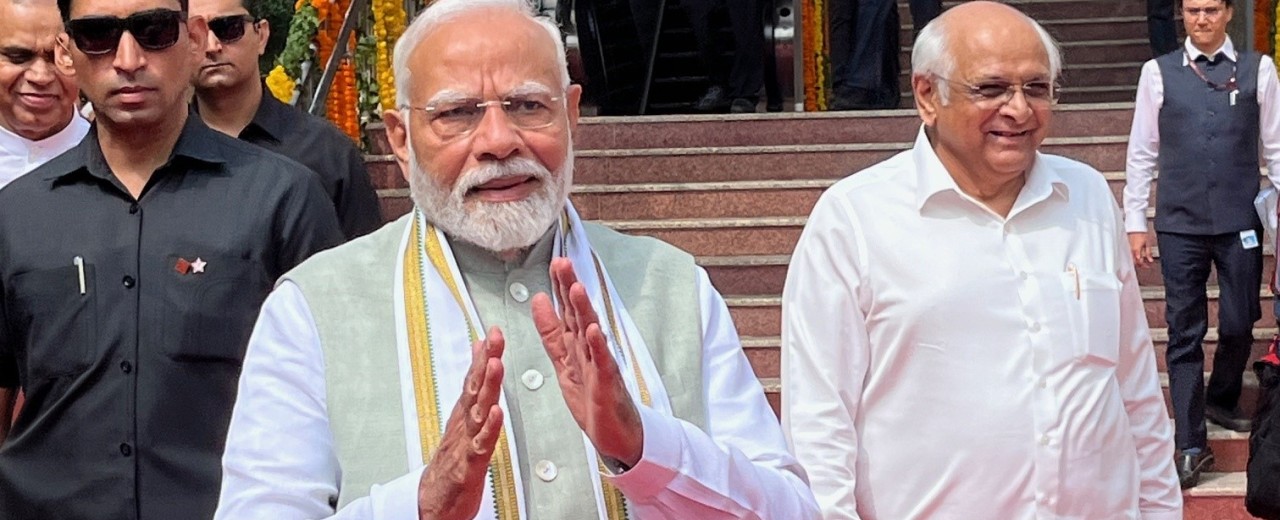
Improving living conditions through European know-how in the transport sector
In addition to climate and energy, sustainable public transport solutions account for a large proportion of KfW’s Global Gateway commitment. Asia in particular, the largest recipient of KfW financing under Global Gateway, is an important region here. The expansion of metro lines in Indian megacities impressively illustrates the benefits for all sides. The construction of a further 20 km section of the Ahmedabad Metro is expected to save around 50,000 tons of CO2 annually, and 120,000 congestion and exhaust-gas-affected commuters are getting to work faster every day. However, not only the population benefits - German and European companies also contribute their technological know-how and supply components and strengthen their presence on a strategically highly relevant foreign market – which is also the case in the expansion of the Bangalore Metro. Thanks to cutting-edge European technologies, a further 19 km section of the network of the 14-million metropolis has been opened. More than 1.3 million passengers will benefit from this once completed.
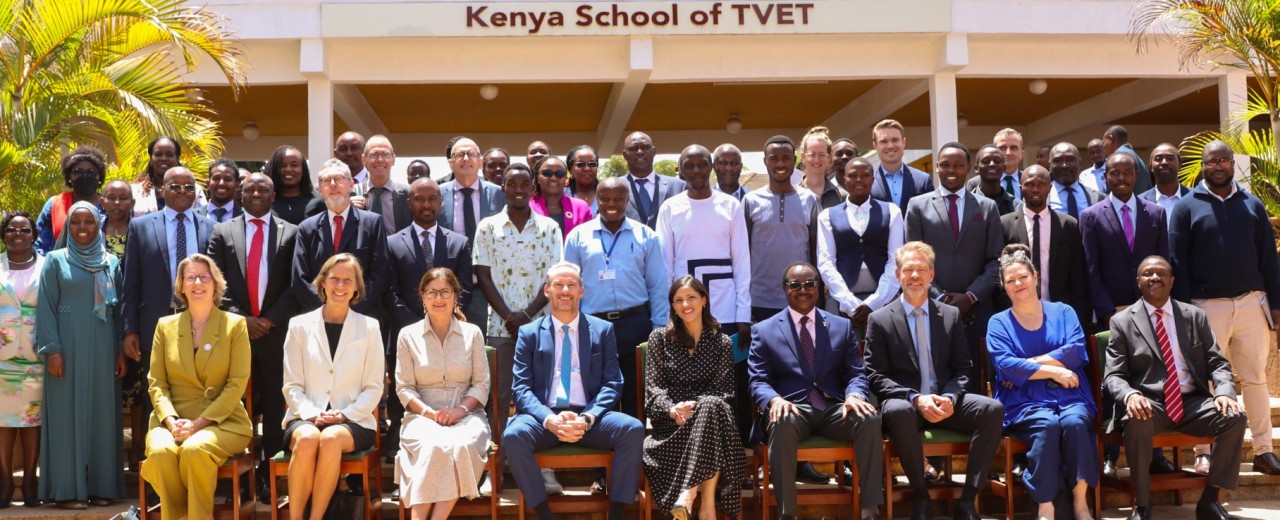
Digitalisation of vocational education and training for better future prospects in Kenya
A milestone of the Global Gateway was also achieved in the education sector in 2025. With its JEFIC partners and the EU, KfW promotes high-quality technical and vocational education and training for young people in Kenya and supports the Kenyan Government in adapting vocational education and training to the needs of the digital world. To this end, centres of excellence will be equipped, accompanied by basic digital infrastructure for at least 50 vocational schools, improved connectivity, including digital services. In a country where the average age is only 20 and around one million young people enter the labour market each year, this will provide the skills needed to create future prospects for young people and their country. And thus also for Europe in an increasingly interconnected world.
At a time when power politics are coming back loudly, Team Europe’s commitment and track record show that determined and smart interaction on a fair play basis delivers benefits for all stakeholders and for our planet. A vision that has linked KfW to the EU since its founding days.

Share page
To share the current page content with your network, click the button below and then select the desired option in the dialog box.
Note on data protection: By clicking the button, your browser's sharing function is used. If you select an external provider when sharing, personal data may be processed by the provider. Please read our data protection principles for more information.
Your browser does not support sharing with external services.
Alternatively, you can also copy the short link: https://www.kfw-entwicklungsbank.de/s/enzB_qvJ.DaAA
Copy link Link copied