
News from 2026-03-19 / KfW Development Bank
Reconstruction of infrastructure in Syria
German FC is a leader in the water sector
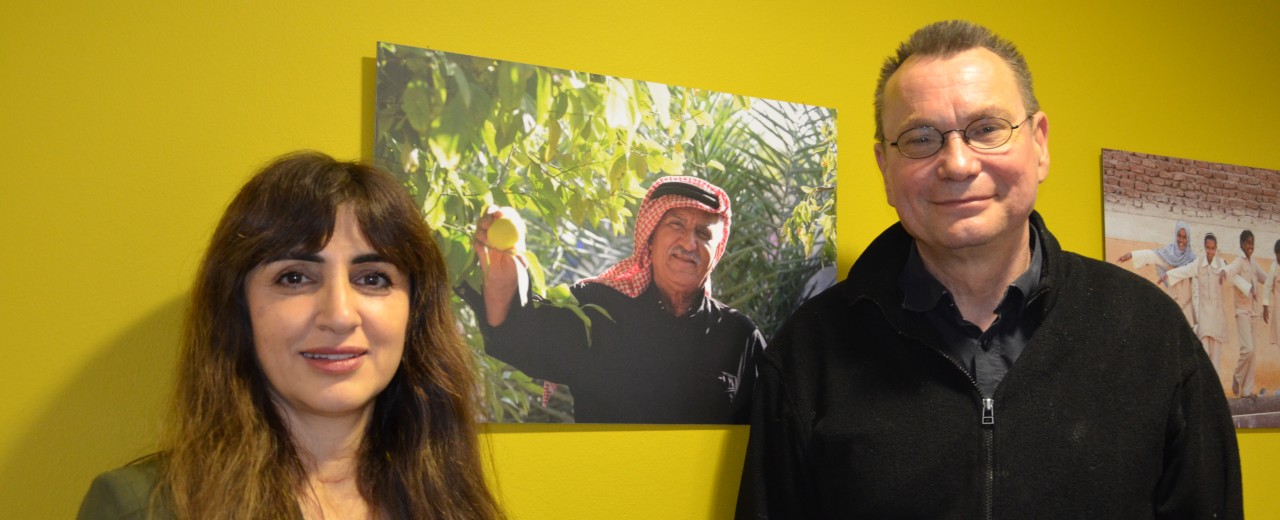
KfW Development Bank has been active in the water sector worldwide for decades on behalf of the Federal Ministry for Economic Cooperation and Development (BMZ). The Middle East region is a prime example of the complex interrelationships between the water sector and a range of challenges: water scarcity, climate change, urbanisation, population growth, high numbers of refugees – and the numerous crises in almost every country.
Dr Hanan Fawaz is an environmental engineer and portfolio manager; Prof. Dr Stefan Gramel is a water resources engineer and, in this capacity, acts as an engineer on water projects in the Middle East region.
After 14 years of war and now, some 18 months after Assad’s fall – what is the state of the country’s infrastructure, particularly in the water sector?
Dr Hanan Fawaz: Public infrastructure has been severely damaged – and this affects all basic services. The Syrian government is endeavouring to initiate reconstruction and ensure it is sustainable. The BMZ is helping it to do so, particularly through us. The KfW portfolio has grown substantially in 2025. Through us, the BMZ has provided 118.5 million euros for the rehabilitation of hospitals, water infrastructure, roads and schools.
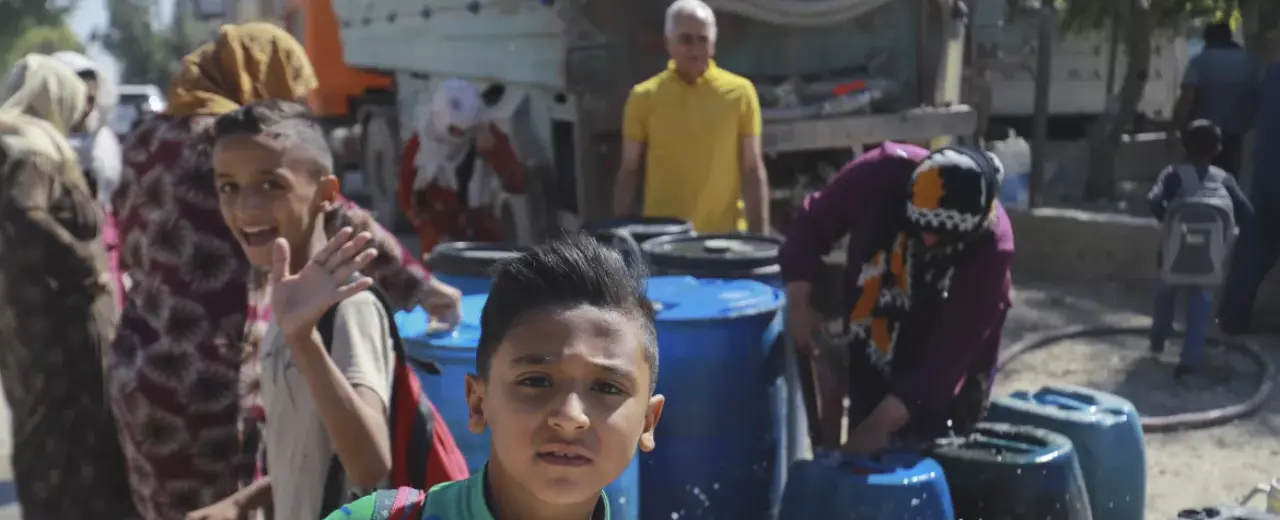
Dr Stefan Gramel: A large proportion of the Syrian population has less than 25 litres of drinking water per person per day. By way of comparison: in Germany the figure is around 120 litres, and in the USA even more than 300 litres. Many people are dependent on expensive water deliveries by lorry. Wastewater disposal is also inadequate: many sewer networks and pumping stations are still out of order; sewage treatment plants are not functioning or only operate in a rudimentary manner. This results in significant health risks. In 2022, 50,000 people contracted cholera. Diarrhoeal diseases pose a particular threat to babies and young children. They are often underestimated: they are the leading cause of the fact that – according to the WHO – approximately 1,000 children under the age of five die every day worldwide.
You’ve already been travelling around the country – what do you see as the biggest challenges?
HF: The financial needs are enormous. Following Assad’s fall, the government’s initial priority was to assess the extent of the destruction, but also to gauge the level of commitment from other donors. German development cooperation plays a leading role in the water sector, whilst the Gulf states and the World Bank are primarily involved in the energy sector.
SG: There are also major challenges in terms of personnel. The management team at the Ministry of Energy and Water has been replaced, and a great many skilled workers who had left the country are waiting for conditions to stabilise before they consider returning.
During the war, financial cooperation was only possible with UN agencies, NGOs and the Syria Recovery Trust Fund (SRTF), which is managed by KfW. Has anything changed in this regard since the change of government? Is there now cooperation again with, for example, the state water authorities?
HF: The German Government has once again pledged bilateral funding for the reconstruction of public infrastructure, with a focus on water and – temporarily – health. However, during a transitional phase, these projects will continue to be implemented through our UN partners, UNICEF and UNDP. We are currently planning to deploy consultants to assess the capacity requirements within the partner ministries regarding the awarding and monitoring of infrastructure projects such as ours. This will also involve identifying opportunities for the German economy.
SG: Our new bilateral UNICEF project specifically focuses on strategically important infrastructure (e.g. pumping stations, drinking water treatment plants), which is crucial to the stability of the water supply. Around 1.8 million people will benefit from this. This includes 1.5 million people who have so far had to make do with less than 25 litres per day and 1 million people who are dependent on expensive and unreliable deliveries by lorry. It is important to us that the ‘Whole of Syria’ approach continues to be applied – meaning that measures are implemented in all regions of Syria. As a result, a project in a region predominantly inhabited by Druze is now being implemented as one of the first under the new funding.
In times when sewage treatment plants and water pipes are damaged, does the issue of climate adaptation play a role? This is certainly the case in neighbouring countries in the region…
SG: Absolutely. Climate change and water scarcity are extremely important issues. In the very dry year of 2025, rainfall was only around 60% of the long-term average. Water supply from springs is particularly crucial in this context: for example, the Fijeh Spring is the most important source of water for the Greater Damascus area; in 2025, it supplied only 2 m³/s compared to the long-term average of 7 m³/s. With the current project, we will stabilise the supply from wells and investigate water resources in the Damascus region in greater detail. In a subsequent phase, small desalination plants for slightly saline groundwater are also conceivable; such projects are already underway in Jordan.
In Israel and the Gulf states, a significant proportion of water demand is met by desalination plants – could this also be an option for Syria?
HF: Desalination is a complex and costly process. However, Saudi Arabia has committed to building a plant on the Mediterranean – partly to stabilise the water supply in the Damascus metropolitan area. The planning and construction will also take a long time – it will certainly take another six or seven years. And that’s without even taking into account the uncertain political situation in the region. Our current focus is on getting help to people in very precarious supply situations as quickly as possible.
Plans are underway to open a KfW office in Damascus – what does cooperation with partners look like? How are trips by colleagues from Frankfurt organised and supported?
HF: We have made a few visits around the country over the past few months and have been able to hold face-to-face discussions on the ground. At the moment, it is difficult to liaise directly with the local authorities from Frankfurt. That will change once our office in Damascus is up and running.

Share page
To share the current page content with your network, click the button below and then select the desired option in the dialog box.
Note on data protection: By clicking the button, your browser's sharing function is used. If you select an external provider when sharing, personal data may be processed by the provider. Please read our data protection principles for more information.
Your browser does not support sharing with external services.
Alternatively, you can also copy the short link: https://www.kfw-entwicklungsbank.de/s/enzBWrMC.DYIA
Copy link Link copied