
News from 2025-12-18 / KfW Development Bank
Protection for coral reefs and mangrove forests in the Caribbean
KfW project wins UN SIDS Partnership Award in the Environment category
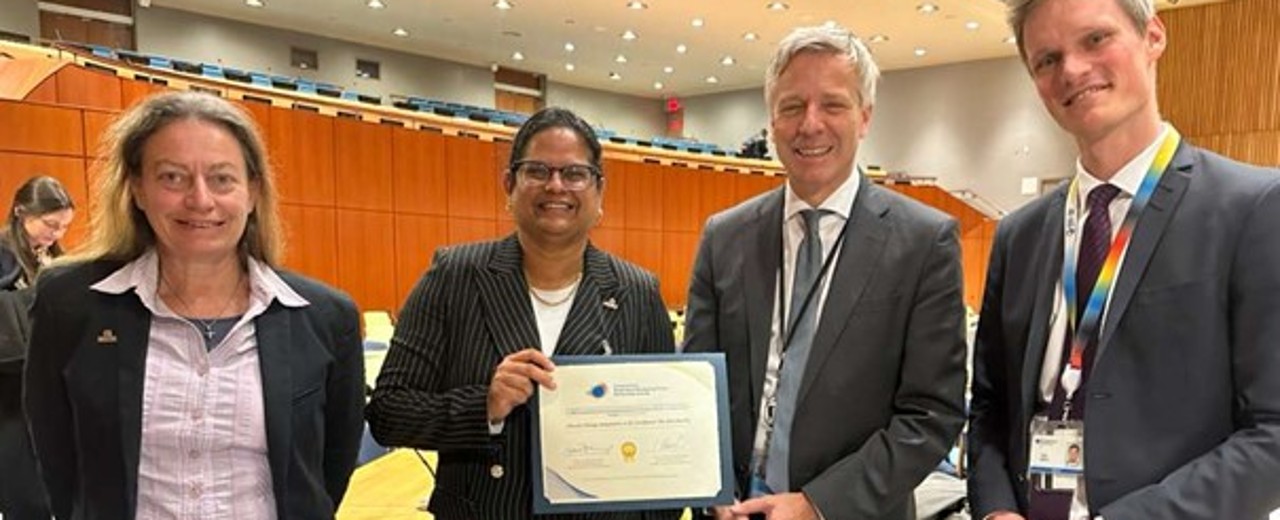
The Ecosystem-based Adaptation Facility (EbA Facility) was honoured with the UN SIDS Partnership Award in the Environment category in New York. The EbA Facility is a financing mechanism co-founded by KfW under the umbrella of the Caribbean Biodiversity Fund (CBF), which has been supporting Caribbean countries in ecosystem-based adaptation measures to climate change since 2016.
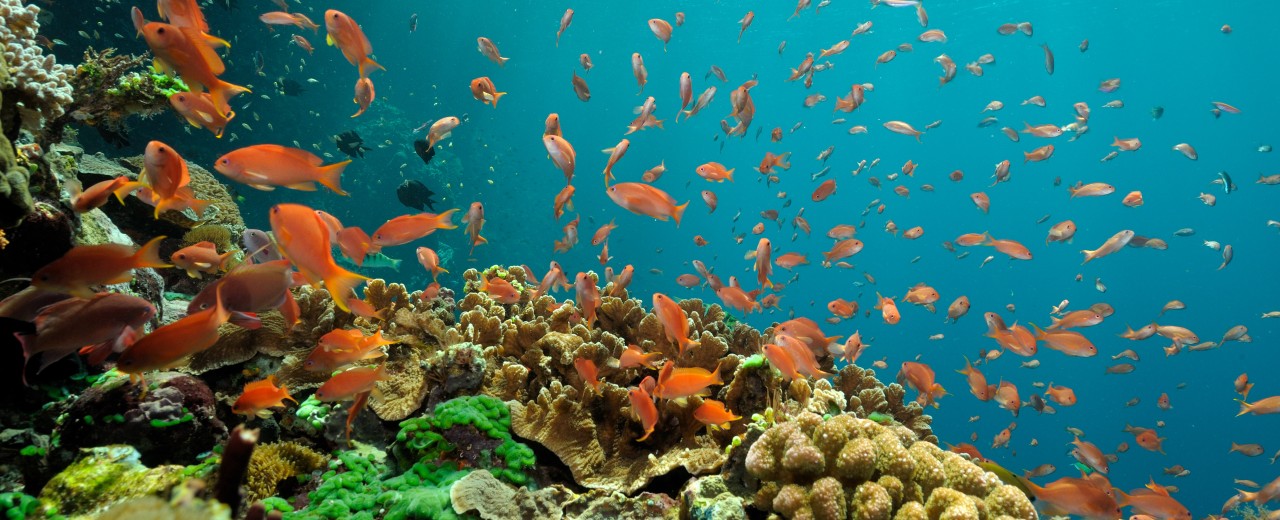
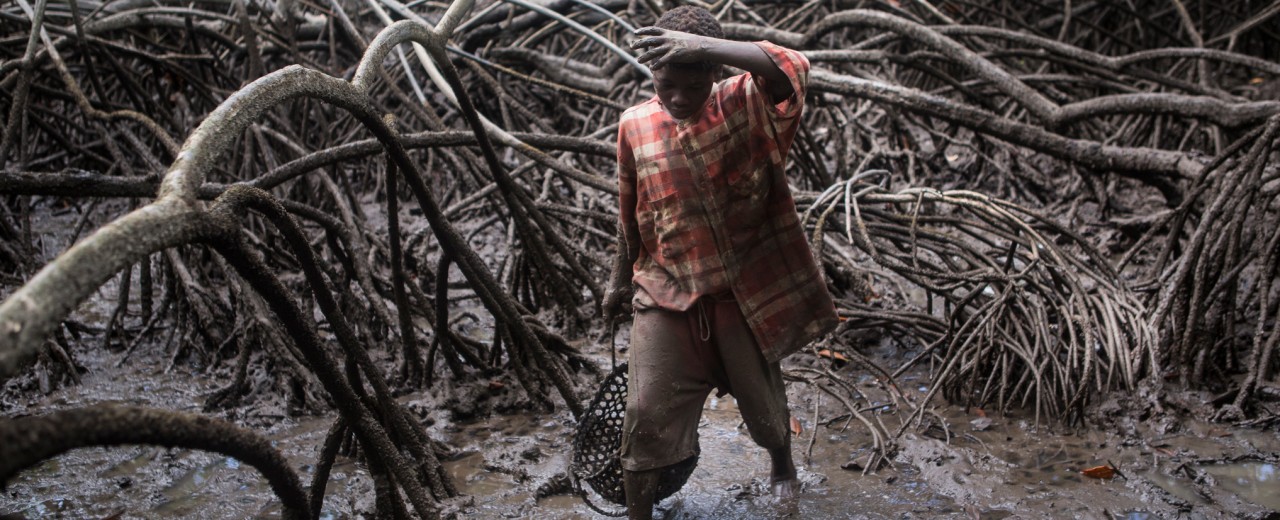
Coral reefs, the ‘rainforests of the seas’, and mangrove forests provide refuge for many creatures, they protect coastlines and are important for fishing and tourism. Corals are colonies of animals formed by coral polyps – tiny cnidarians that build large structures in the sea over many years. However, rising temperatures are causing more and more reefs to bleach, and human influences such as pollution and overfishing are also contributing to the death of these sensitive reefs. Although coral reefs cover only 1.2 per cent of the continental shelves, they are the nursery and habitat for at least a quarter of all known marine species. This makes coral reefs, along with seagrass beds and mangrove forests, among the most productive marine ecosystems. Mangrove forests consist of salt-tolerant trees and shrubs that are perfectly adapted to life in brackish water and tides thanks to their stilt roots and salt glands. They are the habitat of countless marine animals, are of great cultural and economic importance, store large amounts of CO2 and naturally protect the coast against erosion and the force of tropical storms. At the 2024 UN Climate Change Conference in Azerbaijan, the International Union for Conservation of Nature (IUCN) warned that 44 per cent of the approximately 900 known tropical coral species (warm-water corals) are threatened.
Successful projects are needed to counteract this. The UN SIDS Partnership Award recognises initiatives that make an outstanding contribution to the sustainable development of Small Island Developing States (SIDS) in line with the UN SDGs (Sustainable Development Goals). Due to their natural location, SIDS are particularly vulnerable to the effects of climate change. Caribbean coral reefs have declined by more than 50 per cent since the 1970s, threatening biodiversity conservation and weakening natural coastal protection and local economies.
The EbA Facility uses a competitive mechanism to promote projects for the protection and restoration of coral reefs and mangroves. This increases their resilience and at the same time better protects people from the negative effects of climate change, such as coastal erosion and storm surges. In addition, the facility supports innovative approaches such as AI-assisted coral farming, advanced coral propagation methods and genetic exchange programmes. All of this also benefits local value chains from fisheries to tourism. One example: in the Dominican Republic, experts have perfected an AI-supported, remote-controlled facility for coral cultivation on land – a technology that is now being passed on to partners throughout the region. Cuban scientists have further developed the technology and created a national coral spawning calendar for Cuba.
The figures underscore the success of the EbA facility:
- Over US$45 million invested in 34 projects in 14 Caribbean countries
- More than 60,000 hectares of coastal and marine ecosystems improved or protected
- Over 36,000 people (including 16,000 women) benefited directly from the measures
- 6.4 million US dollars in co-financing mobilised
The EbA Facility is thus a pioneering model for promoting climate resilience and biodiversity conservation in the Caribbean. The UN award now recognises the importance of this commitment to sustainable development in a special way. KfW supports the EbA Facility with funds from the Federal Ministry for the Environment, Nature Conservation, Nuclear Safety and Consumer Protection (BMUKN) as part of the International Climate Initiative (IKI), which has been promoting climate protection and adaptation measures worldwide since 2008.
More information on the CBF website.

Share page
To share the current page content with your network, click the button below and then select the desired option in the dialog box.
Note on data protection: By clicking the button, your browser's sharing function is used. If you select an external provider when sharing, personal data may be processed by the provider. Please read our data protection principles for more information.
Your browser does not support sharing with external services.
Alternatively, you can also copy the short link: https://www.kfw-entwicklungsbank.de/s/enzBWrMC.DVsA
Copy link Link copied