
News from 2025-01-30 / KfW Development Bank
KfW's involvement during and after the civil war in Syria
On 8 December 2024, news spread like wildfire across social media in the Arab world: President Bashar al-Assad had left the country. The main player in his downfall was a rebel alliance led by the Islamist group Hayat Tahrir al-Sham (HTS). What happens next? The new de facto government has announced a new constitution and free elections within four years, and HTS leader and now elected transitional president Ahmed al-Sharaa promises to respect the rights of religious and ethnic minorities and women.
German development cooperation was also active during the nearly 14-year war and can support a peaceful transition and contribute to reconstruction in Syria through existing channels. But first, let's take a look back:
In spring 2011, in the wake of the revolutions in Tunisia and Egypt, a peaceful protest movement also formed in Syria. Assad responded with violence: the civil war claimed more than half a million lives, drove 6 million people into exile and turned another 7 million into internally displaced persons – out of a population of 23 million.
Until 2011, KfW's activities in Syria focused primarily on supporting infrastructure projects – especially in water supply and wastewater disposal – and the financial sector. With the outbreak of civil war, the situation changed dramatically and many of the projects that had been planned or were already underway were suspended. The KfW office in Damascus was closed and cooperation with the Syrian government was terminated. However, KfW continued to support people and local structures in various ways over the following 14 years: On behalf of the Federal Foreign Office (AA), the United Arab Emirates and the USA, KfW set up a trust fund: the Syria Recovery Trust Fund (SRTF), which was joined by nine other donors. The aim was to supply people in areas administered by the moderate Syrian opposition (Syrian National Coalition) in the north-east and north-west of the country. KfW cooperates with UN organisations and non-governmental organisations throughout the country. And last but not least, KfW uses funds from the German government to finance programmes in Jordan, Iraq, Lebanon and Turkey that benefit both refugees and the host communities. KfW has committed a good €140 million from the BMZ's Middle East Employment Initiative to support host countries in the region in coping with the influx of refugees.
Between 2012 and 2024, a total of around €683 million was committed via KfW for projects. The funds come from the Federal Ministry for Economic Cooperation and Development (BMZ), the Federal Foreign Office (AA) and other donors.
KfW's successful cooperation projects are also continuing in the ‘new’ Syria. The German Federal Government has clearly stated its intention to help stabilise Syria and support a peaceful transition process. In 2025, KfW received €118 million to promote Syrian reconstruction through targeted infrastructure measures and employment programmes.
Cooperation with NGOs and UN organisations
On behalf of the Federal Ministry for Economic Cooperation and Development (BMZ), projects are being implemented with UNICEF, UNDP, UN-Habitat and the Aga Khan Foundation – contributing to improving living conditions and social cohesion.
UNICEF's work focuses on children and young people. They suffered particularly from the war – their resilience has been and continues to be strengthened through improved school infrastructure, psychosocial care and educational opportunities for adolescents. In addition, there are WASH programmes: since 2025, the focus has been primarily on structural rehabilitation as a contribution to the reconstruction of school infrastructure and water and sanitation services. To this end, German financial cooperation is also funding the rehabilitation of critical water and sanitation infrastructure in various governorates of the country, with a particular focus on climate-friendly technologies, for example for pumping stations and treatment plants. The aim is to make Syria more resilient to water scarcity and climate change. This is accompanied by targeted training and strategic advice for the Ministry of Energy and Water and the regional water authorities to strengthen their capacity to act. At the same time, we are calling on our Syrian partners to do their part to ensure the sustainability of these German investments.
UN-Habitat supports local authorities in rehabilitating public infrastructure. In planning workshops with local communities, internally displaced persons and representatives of the authorities, priorities are set jointly and the implementation of measures is initiated. Representatives of different age groups, men and women, refugees and locals take part in these workshops. In addition to the destruction caused by war, there are the consequences of the earthquake in February 2023, which caused widespread destruction, especially in northern Syria (particularly Aleppo and Idlib).
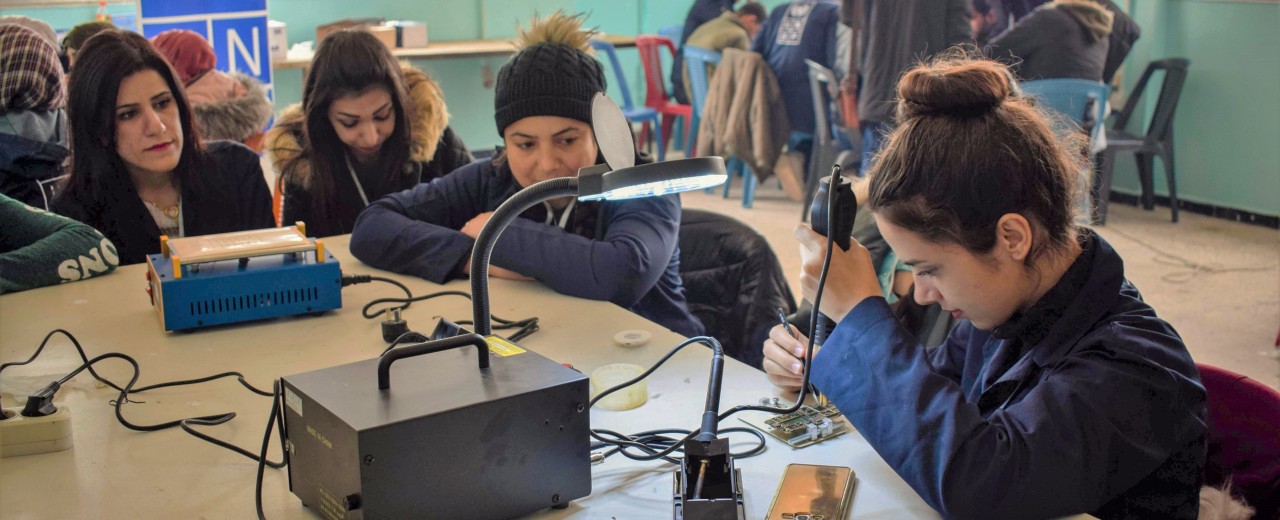
For UNDP, promoting employment is a key concern. Jobs are also an important prerequisite for returnees from neighbouring countries when making their decision. In recent years, short-term jobs have been created primarily through cash-for-work measures – through minor rehabilitation work on social infrastructure (schools, hospitals) and the installation of solar panels on these buildings, as well as the removal of rubble and waste disposal. In addition, training, counselling and job placement services have been organised, as well as subsidies for means of production, machinery and start-ups. The new peace-promoting reconstruction project promised for 2025 is intended to further advance the socio-economic restart by reviving central markets in Syrian economic centres.
In addition, UNDP has been an important partner in restoring basic infrastructure since 2025: the second new project aims to restore the functionality of selected hospitals, particularly in areas with major gaps in care provision. The renovation and modernisation of hospitals addresses the most critical bottleneck in the Syrian health system: bed capacities, operating theatres and intensive care units are being renovated, reliable electricity, water and waste disposal are being ensured, and facilities are being re-equipped with essential diagnostic and life-support equipment. Above all, however, functioning hospitals help to restore and strengthen the Syrian population's trust in their national institutions. This is particularly true in areas that have been severely affected by the civil war and where many returnees live. Rehabilitated hospitals promote interaction, justice and a collective bond.
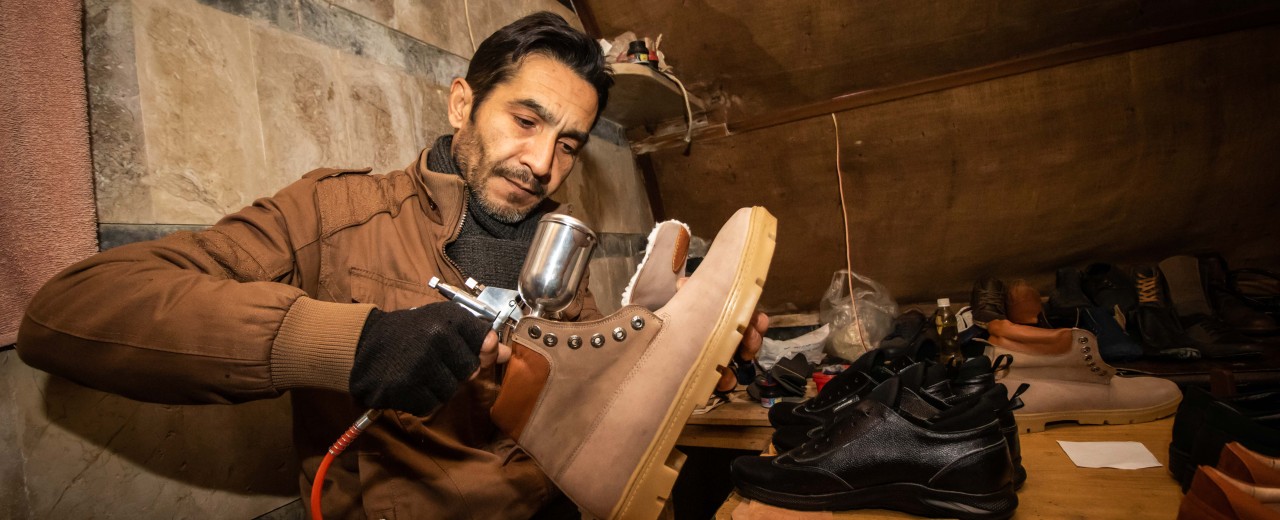
In rural areas, the Aga Khan Foundation (AKF) supports smallholder farmers: they are involved in cooperative and community models, and strategic value chains for arable farming and livestock breeding are to be established. This is an important building block for stabilisation in a situation characterised by food insecurity and a decline in dietary diversity in the country.
A ‘Syria window’ is currently being opened as part of the B4P facility for peace-building (Building for Peace – Nabni Facility), which has so far been active in Iraq and Yemen. The Norwegian Refugee Council (NRC) is the implementing agency, which distributes grants to local NGOs based on local needs assessments for individually identified projects that are selected through a participatory process and consist of infrastructure and service measures as well as peacebuilding activities. In religiously diverse Syria, this not only contributes to reconstruction, but also strengthens the potential for peace at the regional level. B4P pays particular attention to the needs of girls and women.
Established in 2013 – the Syria Recovery Trust Fund
At the beginning of the Syrian crisis in 2012, the German Federal Foreign Office, together with the United Arab Emirates (UAE) and the United States, commissioned KfW to develop and structure the SRTF. Since then, KfW has assumed the role of trustee for the financial management of donor contributions. Local authorities in areas controlled by the moderate opposition, as well as local and international NGOs working in these areas, submitted project proposals to the fund's management unit for the financing of priority measures. This approach strengthens local structures and ensures that the fund's activities meet actual needs on the ground.
Contributions from a total of 12 donors have brought the fund's total volume to just under €84 million. In December 2025, Germany contributed €4 million, and the Netherlands also contributed €4 million.
To date, the fund has reached 16 million people with basic services, income opportunities and food security, and has impressed with its effective implementation, low overheads and high flexibility in responding to political changes.
Two successful SRTF projects
Following the fall of the Assad regime, the SRTF is once again active nationwide and is providing reconstruction support to communities that have been particularly hard hit by the war. In early 2025, the fund launched the ‘Rehabilitation of the Water Supply System’ project in Darayya (rural Damascus), which is renewing the city's main water supply by renovating a central well and installing a solar-powered reverse osmosis plant with three underground water reservoirs. After a nine-month period, around 10,000 people will benefit from safe drinking water. This improves public health, reduces the cost of drinking water supply and decreases dependence on unstable power sources.
The project also strengthens the local community through close cooperation with the administration and creates local jobs. In addition to the water supply, the public park has also been renovated, promoting community life and creating an inclusive environment for all residents. The initiative thus contributes to long-term resilience, social cohesion and the stabilisation of everyday life in Darayya – always with a view to promoting a strong and trusting relationship between the population and local authorities.
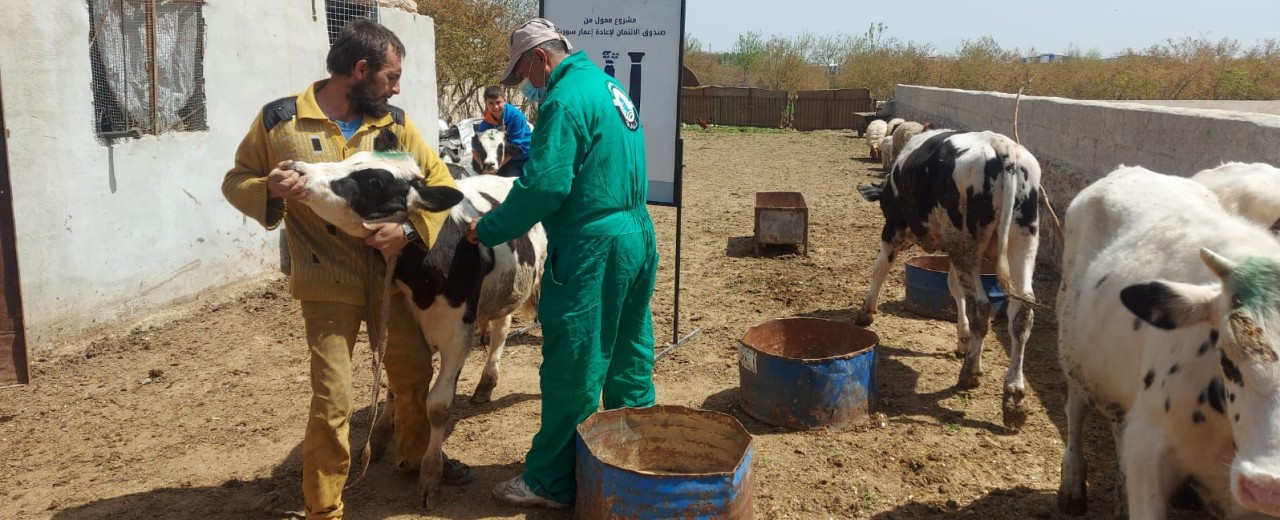
As part of the fund's geographical expansion following the fall of the Assad regime, the project ‘Agricultural Support for Rural Communities in Tartous’ was launched. In partnership with the Aga Khan Foundation, the project particularly strengthens female-headed households and young people. 700 farmers receive direct support, with around 3,500 family members benefiting indirectly.
The six-month programme includes the distribution of agricultural kits containing seeds, fertilisers, tools and rainwater collection systems, as well as 24 technical training courses on sustainable farming methods. Thanks to continuous support, access to agricultural inputs has been improved and expertise expanded. The project thus promotes sustainable, climate-resilient agriculture, increases food diversity and strengthens the resilience of communities. Forty per cent of the beneficiaries are women and young people. This contributes to the inclusive economic participation of particularly disadvantaged population groups in a region characterised by increased social tensions.
Farmer Amal reports: "Irrigating our crops used to be very difficult, as water was not always available because the irrigation network was damaged. The rainwater harvesting systems provided are a great help to us and ease the financial burden, as the main water tank collects rainwater. The assistance also includes technical training on cultivation, harvesting, fertilisers, soil types, home garden maintenance and new farming methods. We are looking forward to the coming harvest with hope and expect good results – thanks to SRTF, the Aga Khan Foundation and other supporters."
As of March 2026

Share page
To share the current page content with your network, click the button below and then select the desired option in the dialog box.
Note on data protection: By clicking the button, your browser's sharing function is used. If you select an external provider when sharing, personal data may be processed by the provider. Please read our data protection principles for more information.
Your browser does not support sharing with external services.
Alternatively, you can also copy the short link: https://www.kfw-entwicklungsbank.de/s/enzBWrMC.DMOA
Copy link Link copied